
Manual Hydraulic Stacker: A Reliable Solution for Efficient Material Handling in Modern Industries
July 16, 2026
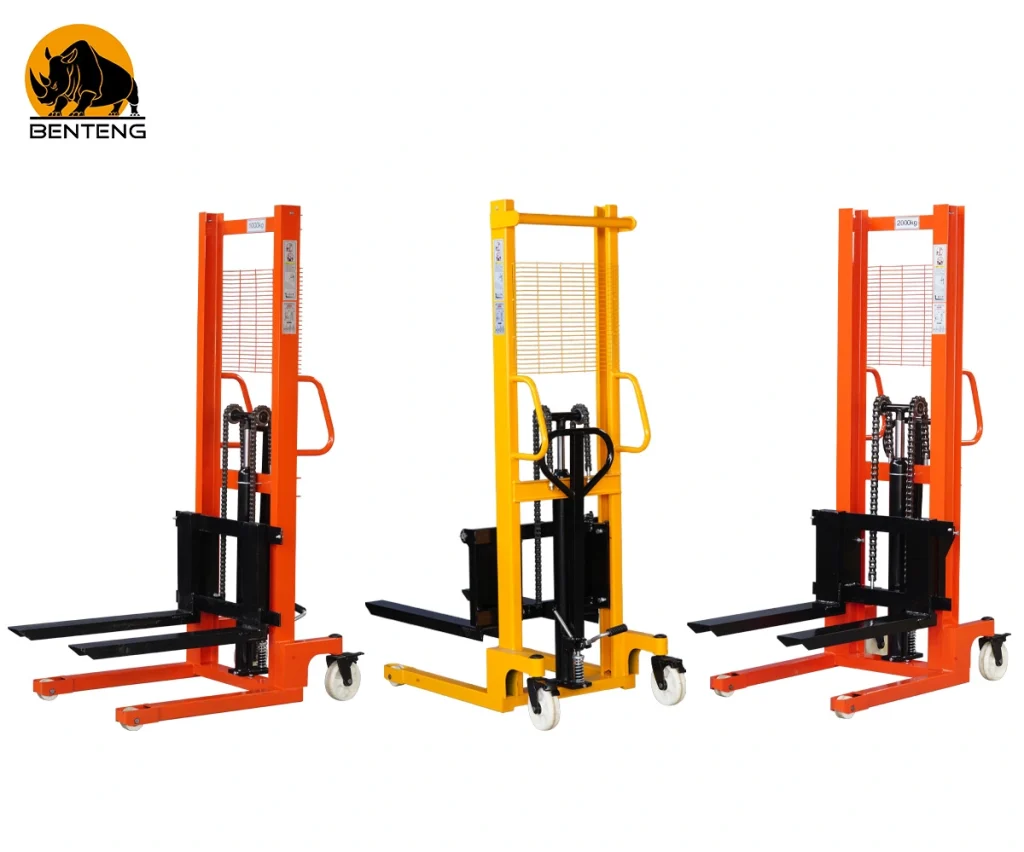
Product Introduction: What Is a Manual Hydraulic Stacker?
With the continuous growth of warehousing, logistics, and manufacturing industries, efficient material handling equipment has become essential for improving productivity and reducing manual labor.
A Manual Hydraulic Stacker is a compact lifting device designed for lifting, moving, and stacking palletized goods at different heights. Compared with large electric forklifts, it offers advantages including simple operation, low maintenance requirements, compact structure, and excellent flexibility for small warehouses and limited working spaces.
Using a manually operated hydraulic lifting system, the stacker enables operators to handle materials efficiently without requiring electricity or fuel. It is suitable for various applications ranging from light-duty packages to heavy industrial goods.
For businesses requiring pallet handling and vertical lifting functions, a manual hydraulic pallet stacker provides a practical and economical solution for improving warehouse efficiency and workplace safety.
Key advantages include:
- No external power supply required
- Low operating and maintenance costs
- Compact design for narrow spaces
- Easy manual operation
- Reliable lifting performance
How Does a Manual Hydraulic Stacker Work?
A manual hydraulic stacker operates through a hydraulic lifting system that converts manual force into lifting power.
When the operator moves the hydraulic handle up and down, the hydraulic pump generates pressure and transfers hydraulic oil into the lifting cylinder. The hydraulic force then drives the piston upward, lifting the mast, fork carriage, and loaded materials smoothly.
The lifting process includes several steps:
Manual Pumping Operation
The operator activates the hydraulic pump by moving the handle, creating the initial lifting force.
Hydraulic Pressure Generation
The hydraulic oil transfers pressure inside the cylinder, allowing the lifting mechanism to move upward.
Fork Lifting Movement
The hydraulic cylinder pushes the mast and fork assembly upward, raising the load to the required height.
Controlled Lowering
The release valve controls hydraulic pressure, allowing the forks and load to descend smoothly and safely.
This simple mechanical design provides stable lifting performance without relying on electricity or fuel, making it suitable for indoor material handling operations.
Main Components of a Manual Hydraulic Stacker
A reliable manual hydraulic stacker consists of several key components designed to ensure safe operation, durability, and long service life.
Heavy-Duty Mast System
The vertical mast structure provides stable lifting support and ensures smooth movement during operation. The reinforced steel frame allows the stacker to handle repeated lifting tasks in demanding environments.
Hydraulic Pump Unit
The hydraulic pump is the core lifting component. It converts manual force into hydraulic power, enabling operators to lift heavy loads with less physical effort.
Fork Assembly
The adjustable forks are designed to handle different pallet sizes and load requirements. Strong steel construction provides excellent load-bearing capability and stability.
Safety Guard Frame
The protective guard frame helps prevent goods from falling backward during lifting operations, improving operator safety.
Steering Wheels and Load Wheels
Durable wheels allow smooth movement through warehouses, workshops, and narrow aisles. High-quality casters improve maneuverability during daily operations.
Handle Control System
The ergonomic handle integrates lifting, lowering, and steering functions, allowing operators to control the stacker easily and efficiently.
Applications of Manual Hydraulic Stackers
Due to their flexibility, compact structure, and cost-effective operation, manual hydraulic stackers are widely used in various industries.
Warehouse & Logistics
Manual hydraulic stackers help workers move, lift, and stack palletized goods efficiently, especially in small and medium-sized warehouses where space optimization is important.
Manufacturing Plants
They are commonly used for transporting raw materials, machine parts, and finished products between different production areas.
Retail Distribution Centers
The compact design makes manual hydraulic stackers suitable for storage rooms, distribution facilities, and retail environments with limited operating space.
Workshops & Maintenance Areas
They provide convenient lifting assistance for machinery parts, tools, and heavy components during maintenance and repair operations.
Packaging & Processing Industries
Manual hydraulic stackers improve handling efficiency by reducing repetitive manual lifting tasks and helping operators maintain better working conditions.
Advantages of Manual Hydraulic Stackers
Simple and Reliable Operation
The manual hydraulic system features a straightforward design, allowing operators to perform lifting tasks easily without complex controls.
Cost-Effective Material Handling
Compared with powered lifting equipment, manual hydraulic stackers require lower investment and reduced maintenance costs.
Flexible Use in Limited Spaces
The compact structure allows easy operation in narrow aisles, small warehouses, and workshops where larger equipment cannot operate efficiently.
Energy-Free Lifting Solution
Without batteries, motors, or external power sources, manual hydraulic stackers provide reliable performance with minimal operating requirements.
How to Choose the Right Manual Hydraulic Stacker?
Selecting the right manual hydraulic stacker depends on several factors related to load requirements and working conditions.
Load Capacity
Choose a suitable lifting capacity based on the maximum weight of pallets and materials being handled. Common capacities include 500kg, 1000kg, 1500kg, and 2000kg.
Lifting Height
Confirm the required lifting height according to storage racks, working platforms, and stacking requirements.
Fork Size
Select suitable fork dimensions according to pallet size and material handling conditions.
Working Environment
Consider aisle width, floor conditions, operation frequency, and available working space before selecting the proper model.
Frequently Asked Questions
What is the lifting capacity of a manual hydraulic stacker?
The lifting capacity depends on the specific model design. Common capacities include 500kg, 1000kg, 1500kg, and 2000kg. Customized solutions are also available according to customer requirements.
Does a manual hydraulic stacker require electricity?
No. A manual hydraulic stacker operates through a hydraulic pumping system and does not require batteries or external electrical power sources.
What are the advantages compared with an electric forklift?
Manual hydraulic stackers offer lower purchase costs, simpler maintenance, compact dimensions, and greater flexibility for small warehouses and indoor applications.
Can a manual hydraulic stacker be used outdoors?
Manual hydraulic stackers are mainly designed for flat indoor surfaces such as warehouses and workshops. For uneven outdoor environments, suitable wheel configurations and customized models should be considered.
How can operators ensure safe operation?
Operators should avoid overloading, inspect hydraulic components regularly, keep loads balanced on the forks, and follow proper lifting procedures.
Conclusion
As industries continue to focus on improving efficiency and reducing operational costs, manual hydraulic stackers remain a practical solution for flexible material handling.
With a simple hydraulic system, durable structure, and easy operation, they help warehouses, factories, and logistics facilities improve productivity while maintaining workplace safety.
For companies seeking an economical and reliable lifting solution, a high-quality manual hydraulic stacker provides excellent performance for pallet handling, stacking, and daily material movement tasks.