
Chain
Chain Sling FAQ
1. What is a chain sling?
A chain sling is a lifting accessory made of high-strength alloy steel chains and fittings, used for lifting and moving heavy loads safely.
It is widely used in:
- Steel industry
- Construction
- Shipbuilding
- Mining
- Machinery manufacturing
- Heavy equipment handling
2. How to choose the right chain sling?
When selecting a chain sling, consider:
- Working Load Limit (WLL)
- Chain grade
- Number of legs
- Length
- Working environment
- Load shape and lifting method
Choose a suitable chain sling according to the weight and application requirements.
3. What are the common grades of lifting chains?
Common lifting chain grades include:
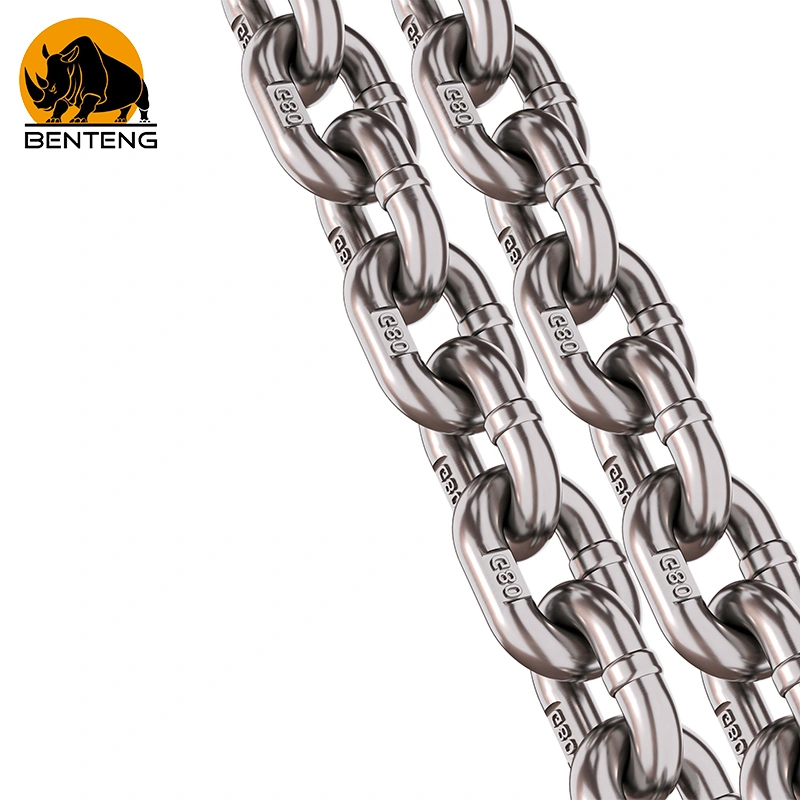
Grade 80 Chain (G80)
- Widely used for general lifting applications
- High strength and good durability
- Cost-effective choice
Grade 100 Chain (G100)
- Higher strength than G80
- Allows higher lifting capacity with lighter weight
- Suitable for heavy-duty lifting applications
4. What types of chain slings are available?
Common types include:
Single Leg Chain Sling
Suitable for:
- General vertical lifting
Two Leg Chain Sling
Suitable for:
- Balanced load lifting
Three Leg Chain Sling
Suitable for:
- Multi-point lifting applications
Four Leg Chain Sling
Suitable for:
- Large and heavy loads requiring stability
5. How to calculate the capacity of a chain sling?
The lifting capacity depends on:
- Chain diameter
- Chain grade
- Number of legs
- Sling angle
A smaller lifting angle will reduce the working load capacity.
Always check the rated capacity before lifting.
6. What is the difference between G80 and G100 chain sling?
G80 Chain Sling:
- Common industrial lifting chain
- Reliable performance
- Widely used in construction and manufacturing
G100 Chain Sling:
- Higher strength
- Lighter weight at the same capacity
- Suitable for heavier lifting requirements
G100 is preferred when higher lifting capacity and lower sling weight are required.
7. How to use a chain sling safely?
For safe operation:
✔ Check the sling before use
✔ Confirm the rated load capacity
✔ Avoid shock loading
✔ Ensure hooks are properly connected
✔ Do not use damaged chains or fittings
✔ Never stand under suspended loads
8. How to inspect a chain sling?
Before each use, check:
- Chain wear
- Cracks or deformation
- Bent hooks
- Damaged connecting links
- Rust or corrosion
Remove damaged chain slings from service immediately.
9. How to maintain a chain sling?
Maintenance tips:
✔ Keep the chain clean and dry
✔ Apply suitable lubricant when necessary
✔ Store in a dry place
✔ Avoid contact with corrosive chemicals
✔ Inspect regularly before use
Proper maintenance helps extend service life.
10. Can chain slings be customized?
Yes.
Chain slings can be customized according to customer requirements:
- Chain diameter
- Length
- Number of legs
- Hook type
- Fittings
- Color marking
- Packaging
OEM service is available for distributors and industrial users.
11. What certifications are available for chain slings?
For international markets, chain slings can be supplied with:
- CE Certification
- Load Test Certificate
- Inspection Report
- Material Test Certificate
Certification requirements depend on the application and destination market.
12. What information should I provide when requesting a quotation?
Please provide:
- Required lifting capacity
- Chain grade (G80/G100)
- Chain diameter
- Number of legs
- Sling length
- Hook and fitting requirements
- Quantity
This information helps us recommend the correct chain sling.
13. Why choose Benteng chain slings?
Benteng Hoisting provides reliable lifting slings and accessories for industrial applications.
Our advantages:
✔ High-strength lifting chains
✔ Strict quality control
✔ Factory direct supply
✔ OEM customization
✔ Professional export service
Benteng Hoisting — Your Reliable Partner for Lifting Solutions.