
What Are the Advantages of an Electric Chain Hoist for Industrial Lifting?
October 21, 2026
An electric chain hoist helps industrial businesses lift and position loads with less manual effort, more consistent control, and improved workflow efficiency. Its key advantages include powered lifting, precise load movement, compact installation options, and suitability for repeated material handling tasks. For example, an automotive parts factory can use an electric chain hoist to move components between assembly stations, reducing manual handling and helping operators maintain a consistent production flow. A warehouse may use one to load heavy components onto workbenches, while a maintenance team can lift machinery parts during equipment servicing. The right model depends on load capacity, lifting height, operating frequency, installation space, and environmental conditions. Understanding these factors helps buyers determine whether an electric chain hoist offers practical advantages for their facility.
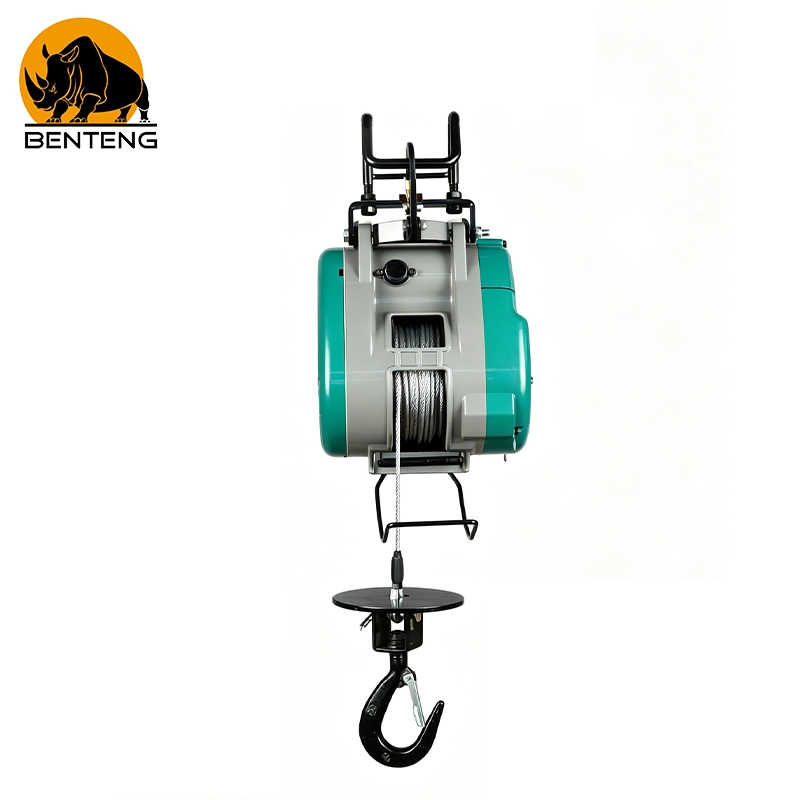
1. How Does an Electric Chain Hoist Improve Industrial Productivity?
Productivity is one of the main reasons businesses choose powered lifting equipment. Manual lifting devices require operators to supply the lifting force, which can limit handling speed and increase physical demands. An electric chain hoist uses a motor-driven mechanism to raise and lower loads, making repetitive lifting tasks easier to manage.
Reduced Manual Effort and More Consistent Handling
A powered hoist reduces the physical effort required to lift heavy materials. Operators control the lifting movement through a pendant or another compatible control system, depending on the equipment configuration.
This arrangement can help businesses standardize repetitive handling tasks. For example, a metal fabrication workshop may need to lift steel parts from storage racks onto processing equipment throughout each shift. A properly selected electric chain hoist can support these transfers with less manual lifting effort.
Reduced physical effort does not eliminate workplace risks. Operators still need suitable training, correct rigging, clear lifting routes, and procedures for controlling suspended loads.
Better Support for Repetitive Production Tasks
Many factories repeat the same lifting operation hundreds of times during a production cycle. An electric chain hoist can support these workflows by providing powered lifting and lowering at a controlled operating speed.
The actual productivity benefit depends on lifting height, load weight, travel distance, operator positioning, and cycle frequency. A hoist that suits the production process can reduce unnecessary handling time without forcing operators to rush.
For example, an equipment assembly plant may use a hoist to position motor housings before fastening and inspection. The hoist handles the vertical movement while workers focus on alignment and assembly.
Integration with Existing Material Handling Systems
An electric chain hoist can operate as a stationary lifting unit or form part of a larger material handling arrangement. Depending on its configuration, it may work with a compatible trolley, overhead beam, gantry, or workstation lifting system.
This flexibility helps businesses adapt lifting equipment to their production layout. A fixed installation may suit a dedicated assembly station, while a trolley-mounted configuration may allow horizontal movement along a suitable beam.
Before purchasing, buyers should confirm the hoist’s mounting requirements, trolley compatibility, available headroom, and supporting structure capacity. These details determine whether the equipment can integrate safely with existing operations.
2. What Safety and Load Control Advantages Does an Electric Chain Hoist Offer?
An electric chain hoist can support safer material handling when its protective features match the application and operators follow established procedures. Powered movement gives operators direct control over lifting and lowering, while suitable safety devices help address specific equipment risks.
Controlled Lifting and Lowering
Motorized lifting allows operators to raise or lower loads through designated controls rather than relying on manual pulling. Depending on the model, available controls and lifting speeds can help operators position components during assembly, maintenance, and loading tasks.
For example, a machinery manufacturer may need to place a gearbox onto a mounting platform with limited clearance. Controlled movement can help the operator align the component more accurately, provided the load remains stable and the operator can observe the lifting area.
Buyers should compare lifting speed, control response, braking performance, and any available variable-speed functions. These features affect how well the equipment suits tasks that require careful positioning.
Braking and Load-Holding Functions
The braking system helps stop movement and hold the load under the conditions specified by the manufacturer. Buyers should verify the brake design, rated capacity compatibility, inspection requirements, and maintenance intervals.
A brake cannot compensate for incorrect rigging, excessive loading, or damaged lifting components. Operators must keep loads within rated limits and inspect the chain, hook, safety latch, and related parts according to the equipment manual.
Overload Protection and Travel Limits
Depending on the configuration, an electric chain hoist may include overload protection and upper or lower travel limit switches. These devices address different risks and should not be treated as interchangeable.
Overload protection helps prevent lifting beyond a defined load threshold. Travel limit switches restrict movement at designated positions, helping reduce the risk of excessive hook travel.
Buyers should confirm which protective devices come with the quoted model and how each device operates. They should also establish inspection and testing procedures before the hoist enters service.
Reducing Manual Handling Risks
Powered lifting can reduce the need for workers to lift heavy objects directly. It may also help limit awkward handling during repetitive transfers between workstations.
However, a hoist does not remove every ergonomic or operational hazard. Poor load balance, swinging materials, obstructed travel paths, and incorrect sling selection can still cause injuries.
Businesses should combine appropriate lifting equipment with risk assessments, operator training, suitable accessories, and clear procedures for managing suspended loads.
3. Which Electric Chain Hoist Configuration Suits Different Industrial Applications?
Not every lifting task requires the same equipment design. Load characteristics, working conditions, installation constraints, and exposure to environmental hazards influence the most suitable configuration.
Standard Models for General Manufacturing
A standard electric chain hoist may suit workshops, warehouses, assembly lines, and maintenance areas with ordinary industrial conditions. Buyers should assess rated capacity, lifting height, operating duty, lifting speed, power supply, and mounting arrangements.
For a factory handling machine components, the required capacity should cover the heaviest planned load, including any relevant lifting accessories. The duty classification should also match the expected frequency of operation.
Businesses should avoid selecting equipment solely by maximum lifting capacity. A model may lift a particular load but still fail to meet the required duty cycle or installation constraints.
Heavy-Duty Models for Frequent Lifting
A heavy duty chain hoist may suit applications involving demanding load conditions or frequent operating cycles, provided its rated capacity and duty classification match the actual task.
For example, a steel processing facility may repeatedly move fabricated components between production stages. The buyer should consider load distribution, lifting frequency, starts per hour, motor protection, brake wear, and maintenance access.
Higher capacity alone does not establish suitability for intensive use. The selected model must meet the required operating duty, and the supporting structure must safely carry the intended loads.
Low-Headroom Models for Restricted Spaces
Some facilities have limited vertical clearance between the hoist and the load. This can reduce the usable lifting height or interfere with nearby machinery.
A low headroom chain hoist can help address these restrictions through a configuration designed to reduce the space required above the hook. Buyers should compare the overall dimensions, hook approach, lifting height, trolley arrangement, and service access.
For example, a component assembly line may have overhead pipes and equipment that restrict installation space. A low-headroom configuration may provide more usable vertical travel, subject to a full installation review.
Models for Specialized Environments
Certain working environments require additional protection beyond standard industrial configurations. Moisture, corrosive substances, conductive dust, or potentially explosive atmospheres can affect equipment suitability.
A stainless steel electric hoist may be worth evaluating for applications where corrosion resistance and cleanability are important. Buyers should confirm the materials, surface finish, enclosure protection, and suitability for the specific cleaning agents or process conditions.
Facilities handling flammable gases, vapors, or combustible dust may require an explosion-proof electric chain hoist. The required equipment must match the site’s hazardous-area classification and applicable regulations. A product label alone does not establish suitability for every hazardous location.
For corrosive or hygiene-sensitive environments, buyers can also assess a stainless steel electric hoist against the actual exposure conditions. Stainless steel construction may address certain corrosion concerns, but it does not automatically make the entire hoist suitable for food processing, pharmaceutical production, or washdown environments.
Facilities with restricted overhead clearance can consider a low headroom chain hoist when comparing available installation options. The final choice should account for the load, lifting height, beam arrangement, and maintenance requirements.
4. How Does an Electric Chain Hoist Affect Operating Costs and Long-Term Value?
The initial purchase price is only one part of the equipment investment. Businesses should also consider installation, maintenance, spare parts, operator training, downtime, and expected service life.
Labor Allocation and Workflow Efficiency
An electric chain hoist can reduce the manual effort required for repetitive vertical lifting. This may allow workers to focus more time on assembly, inspection, positioning, or other production tasks.
The financial impact depends on how the hoist fits into the workflow. A machine used only occasionally may deliver limited productivity gains, while equipment serving a high-frequency workstation may provide more measurable benefits.
Buyers should estimate expected lifting cycles, handling time, labor requirements, and potential bottlenecks before calculating return on investment.
Maintenance and Spare Parts Planning
Routine maintenance helps keep the hoist operating within its intended conditions. Common maintenance considerations include chain inspection, lubrication where specified, brake checks, hook condition, electrical controls, and limit-switch function.
Maintenance requirements vary by design, operating duty, and environmental conditions. Buyers should request the operating manual and confirm recommended inspection intervals before placing an order.
Spare parts availability also affects downtime. Procurement teams should clarify which parts require periodic replacement, typical lead times, and how the supplier supports troubleshooting.
Energy Use and Operating Duty
Electric hoists consume power during operation, but actual energy costs depend on motor rating, lifting time, load profile, and operating frequency. Buyers should avoid assuming that every higher-capacity or more automated model will reduce energy consumption.
A practical comparison considers the required output and expected usage rather than motor power alone. Where energy consumption is important, request relevant technical data and assess it against the planned operating schedule.
Comparing Total Cost of Ownership
Total cost of ownership provides a more complete basis for comparing equipment options. It includes the purchase price and the costs associated with installation, operation, maintenance, and downtime.
Table 1. Cost factors to evaluate when purchasing an electric chain hoist
| Cost factor | What buyers should assess |
|---|---|
| Purchase price | Hoist, trolley, controls, and included accessories |
| Installation | Mounting work, electrical supply, and commissioning |
| Energy | Motor rating, operating time, and expected lifting cycles |
| Maintenance | Inspections, lubrication, and scheduled servicing |
| Spare parts | Replacement components, availability, and delivery times |
| Downtime | Potential production interruption during faults or repairs |
| Training | Operator instruction and maintenance personnel requirements |
| Service life | Expected operating conditions and manufacturer guidance |
A lower initial price may not provide the lowest long-term cost. Buyers should compare equipment with equivalent capacity, duty, configuration, safety features, and service scope to avoid misleading comparisons.
5. How Should Buyers Select the Right Electric Chain Hoist?
A structured purchasing process helps manufacturers choose equipment that matches both operational needs and workplace requirements. Before requesting quotations, buyers should prepare a clear specification covering the intended load, operating cycle, installation, and environment.
Define the Load and Lifting Requirements
Start by identifying the maximum load weight, including relevant lifting accessories. Confirm the required lifting height, lifting speed, frequency of use, and expected operating duration.
Also determine whether the hoist needs to move horizontally. A stationary unit may suit a fixed workstation, while a trolley-mounted model may better support movement along a compatible beam.
These requirements help narrow the available models before detailed technical comparisons begin.
Confirm Installation and Power Requirements
Check the available headroom, beam dimensions, support structure, and electrical supply. Confirm whether the installation requires a pendant, wireless control, trolley, or other accessories.
The supporting structure must handle the loads and forces associated with the planned lifting operation. A qualified professional should assess structural suitability where necessary.
For existing facilities, examine the layout and surrounding equipment before selecting the hoist. Installation constraints can affect usable lifting height, load travel, inspection access, and operator visibility.
Compare Technical Specifications and Supplier Support
Request a complete technical datasheet and clarify the scope of supply. Compare rated capacity, lifting speed, duty classification, motor specifications, braking system, protective devices, and operating limits.
Ask the supplier to identify included safety features and available options. Confirm the documentation supplied with the equipment, including manuals, inspection guidance, test records, and applicable compliance documents.
After-sales support also deserves attention. Buyers should establish how the supplier handles technical questions, replacement parts, troubleshooting, and maintenance guidance.
If you are comparing chain hoists for a new production line or an existing facility, contact Benteng to discuss your lifting requirements and equipment configuration.
Match Equipment to the Full Operating Scenario
The final decision should reflect the complete lifting task rather than a single specification. A hoist with sufficient capacity may still be unsuitable if its duty rating, lifting height, environmental protection, or installation arrangement does not match the application.
Table 2. Electric chain hoist selection checklist
| Selection item | Information to prepare |
|---|---|
| Rated capacity | Maximum load and lifting accessory weight |
| Lifting height | Required hook travel and available headroom |
| Operating frequency | Lifts per hour, shifts per day, and duty classification |
| Movement | Stationary installation or trolley travel |
| Environment | Indoor, outdoor, corrosive, wet, dusty, or hazardous |
| Power supply | Available voltage, phase, and frequency |
| Safety functions | Required braking, overload protection, and travel limits |
| Maintenance | Inspection access, spare parts, and service arrangements |
| Documentation | Technical datasheet, manual, test records, and compliance details |
Frequently Asked Questions
1. What are the main advantages of an electric chain hoist?
The main advantages include reduced manual lifting effort, controlled load movement, support for repetitive handling, and flexible installation options. The actual benefits depend on the hoist configuration, operating conditions, and how it fits into the production workflow.
2. What is the difference between an electric chain hoist and a motorized chain hoist?
Both terms generally describe chain-based lifting equipment powered by an electric motor. Product terminology varies between manufacturers, so buyers should compare the actual mechanism, rated capacity, duty classification, controls, and safety features.
3. Is an electric chain hoist suitable for heavy industrial loads?
It can be suitable when the model’s rated capacity, duty classification, lifting height, and configuration match the application. Buyers should verify the complete lifting system, including the supporting structure and lifting accessories, before operation.
4. What is an electric chain block?
An electric chain block is a common term for a powered chain lifting device. It uses an electric motor to raise and lower loads through a chain mechanism. Buyers should confirm whether a particular product includes a trolley or only provides vertical lifting.
5. How do I choose an industrial chain hoist for frequent operation?
Review the required load, operating frequency, duty classification, motor protection, braking system, maintenance schedule, and spare parts availability. Frequent lifting may require a configuration designed for the intended duty rather than a standard model selected only by capacity.
6. Can an electric chain hoist reduce workplace injuries?
It can reduce the need for manual lifting and help operators control loads during material handling. However, safe operation still requires correct rigging, operator training, suitable equipment, inspections, and clear procedures around suspended loads.
7. How often should an electric chain hoist receive maintenance?
The schedule depends on the manufacturer’s instructions, operating conditions, usage frequency, and applicable regulations. Operators should complete required checks and report defects, while competent personnel should conduct inspections and maintenance at appropriate intervals.
8. What information should I provide when requesting a quotation?
Provide the required capacity, lifting height, lifting speed, operating frequency, power supply, installation arrangement, and working environment. Include any special requirements for restricted headroom, corrosion resistance, hazardous areas, or control systems.
Benteng provides lifting equipment for industrial applications where equipment selection must reflect defined operating requirements. When evaluating an electric chain hoist, buyers should consider capacity, duty classification, installation constraints, safety functions, and maintenance support together. Benteng encourages project teams to share their lifting specifications and site conditions early in the procurement process, helping both parties assess suitable equipment configurations and clarify technical requirements before ordering.
References
- International Organization for Standardization (ISO). ISO 12100: Safety of Machinery. A standard addressing machinery risk assessment and risk reduction principles.
- Occupational Safety and Health Administration (OSHA). Overhead and Gantry Cranes, 29 CFR 1910.179. Guidance on applicable crane operating and safety requirements.
- Health and Safety Executive (HSE). Lifting Equipment. Guidance on lifting equipment selection, safe use, and risk management.
- American Society of Mechanical Engineers (ASME). B30.16: Overhead, Underhung, and Stationary Hoists. A standard covering hoist construction, installation, operation, inspection, testing, and maintenance.