
How Do Electric Winches Work in Industrial Lifting Applications?
August 30, 2026
An electric winch works by converting electrical energy into controlled mechanical pulling or lifting force. The motor drives a gearbox, which increases torque and controls drum speed. The drum then winds or unwinds a rope according to the operator’s command. A brake system holds the load when movement stops. Controls, limit devices, and structural components complete the system. In industrial applications, the exact configuration depends on load capacity, lifting height, rope speed, duty cycle, installation method, and working environment. For buyers, understanding this operating sequence helps with equipment selection and system design.
An electric winch can handle pulling, positioning, lowering, and lifting tasks across many industrial environments. However, not every winch suits suspended loads. Buyers must distinguish between equipment designed for pulling and equipment designed for controlled lifting. Rated capacity, braking performance, rope configuration, motor power, and operating duty all affect suitability.
For example, a workshop may use a compact winch to position machinery during maintenance. A construction project may require a higher-capacity system for repeated material lifting. A production plant may need accurate load positioning during assembly. Each application places different demands on the drive system.
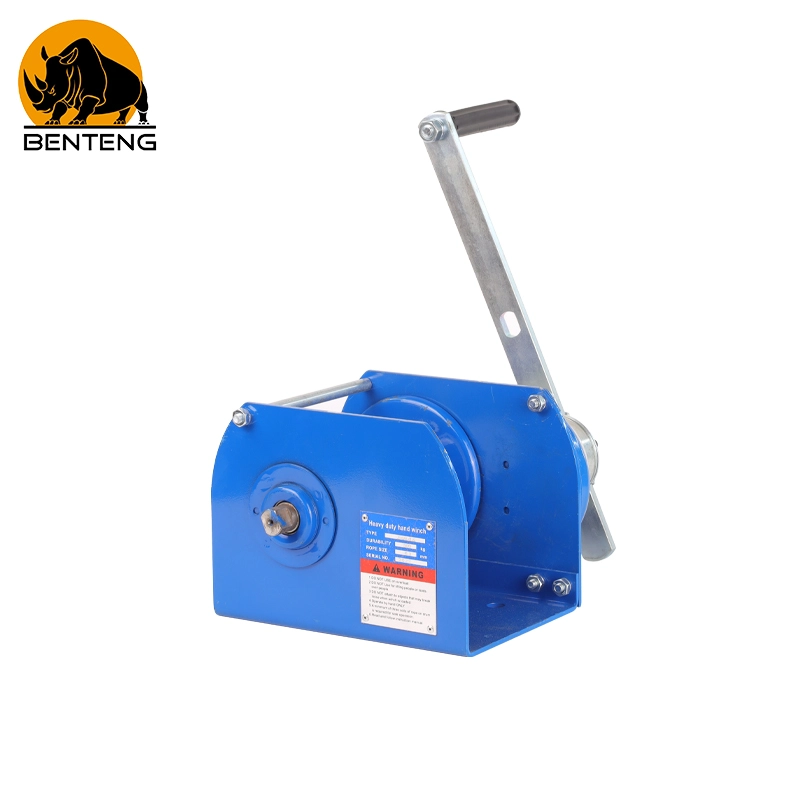
What Are the Main Components of an Electric Winch?
The operating principle becomes easier to understand when the machine is divided into its main mechanical and electrical components. Each component performs a specific function within the power transmission and load-control system.
Electric Motor
The electric motor provides the primary source of mechanical power. When the operator activates the control system, electrical current reaches the motor. The motor converts this electrical energy into rotational motion.
Motor selection depends on several factors:
- Rated lifting or pulling capacity
- Required rope speed
- Duty cycle
- Voltage and frequency
- Starting torque
- Ambient operating conditions
- Available electrical supply
A motor with higher power does not automatically create a better winch. The complete transmission system must match the required load and speed.
For lifting applications, the motor must also work effectively with the braking and gearbox systems. Poor coordination between these components can affect starting, stopping, heat generation, and load control.
Gearbox
The gearbox transfers motor rotation to the drum while increasing available torque. Electric motors often operate at relatively high rotational speeds. The winch drum requires lower speed and higher torque.
The gearbox provides this conversion.
For example, assume a motor rotates at 1,500 revolutions per minute. The drum cannot normally operate at the same speed for a controlled lifting application. The gearbox reduces rotational speed while increasing torque at the output shaft.
Gear ratio affects several operating characteristics:
| Parameter | Lower Gear Ratio | Higher Gear Ratio |
|---|---|---|
| Drum speed | Higher | Lower |
| Output torque | Lower | Higher |
| Lifting speed | Higher | Lower |
| Load control | Application dependent | Usually easier at lower speed |
| Motor demand | Depends on load | Depends on transmission efficiency |
Table 1. General relationship between gearbox ratio and winch performance.
The final ratio should match the required line speed, load, motor characteristics, and drum dimensions. Buyers should therefore evaluate the complete transmission system rather than selecting the motor alone.
Drum and Rope
The drum stores the working rope during operation. When the drum rotates in one direction, the rope winds onto the drum. When it rotates in the opposite direction, the rope pays out.
Many industrial models use steel wire rope because it provides high tensile strength and good resistance to mechanical wear.
An electric wire rope winch normally includes a grooved drum or another rope-guiding arrangement. The drum geometry must match the rope diameter and winding configuration.
Poor rope winding can create uneven loading on the drum. It can also cause rope overlap, crushing, or accelerated wear.
Rope selection therefore requires more than checking nominal diameter. Buyers should consider rope construction, strength, flexibility, bending requirements, environmental exposure, and compatibility with the drum.
OSHA notes that wire rope consists of wires, strands, and a core. Its construction affects flexibility, strength, and resistance to environmental damage.
Brake System
The brake controls the load when the motor stops or when the operator releases the control.
This function becomes especially important during lifting. The brake must prevent unwanted drum rotation and hold the load within the equipment’s rated operating conditions.
Different winch designs may use electromagnetic, mechanical, hydraulic, or other braking arrangements. The correct configuration depends on the machine design and application.
For lifting equipment, buyers should pay close attention to:
- Holding capability
- Brake response
- Emergency stopping
- Power-loss behavior
- Heat dissipation
- Inspection requirements
- Compatibility with the rated load
OSHA requirements for certain maritime lifting equipment state that electric winches must stop motion and apply brakes automatically when electrical power fails.
This illustrates an important design principle. Load control cannot depend only on the electric motor.
Control System
The control system determines how the operator starts, stops, raises, lowers, or adjusts the load.
Basic systems may use pendant controls. More advanced installations can integrate contactors, variable frequency drives, remote controls, limit switches, overload protection, and emergency stop circuits.
The control system should match the operating environment and required precision.
For example, a material-handling station may require simple up-and-down control. A production line may require variable-speed movement. A remote installation may require wireless control with additional safeguards.
How Does an Electric Winch Lift a Load?
The lifting process follows a controlled sequence from electrical input to mechanical output.
First, the operator activates the lifting command. The control circuit sends power to the motor. The motor begins rotating and produces torque.
Second, the gearbox transfers this torque to the drum. The gearbox reduces rotational speed while increasing usable output torque.
Third, the drum rotates and winds the wire rope. The rope moves through the required lifting path and transfers force to the load.
Fourth, the brake system controls stopping and holding. The operator can stop the movement when the load reaches the required position.
This process may appear simple, but several engineering variables interact during operation.
Motor Torque and Drum Torque
The motor generates torque at its shaft. The gearbox then changes the available torque at the drum.
A simplified relationship is:
Drum torque ≈ Motor torque × Gear ratio × Transmission efficiency
The actual calculation requires the motor characteristics, gearbox ratio, efficiency, drum radius, and load conditions.
The drum radius also affects line pull. A larger effective drum radius requires more drum torque for the same rope tension.
This becomes important when several rope layers accumulate on the drum. As the effective radius changes, the available line pull and rope speed can also change.
Rope Speed and Lifting Speed
Rope speed determines how quickly the load moves.
A higher rope speed can improve productivity. However, high speed may reduce positioning accuracy and increase dynamic effects during starting and stopping.
A lower speed provides greater control for certain applications. It can also reduce impact during load positioning.
For this reason, industrial buyers should define the required lifting speed before selecting the motor and gearbox.
Example: Workshop Material Handling
Consider a workshop that needs to lift a 2-ton machine component.
The buyer may initially focus on the 2-ton rated capacity. However, several additional questions matter.
The required lifting height may be 8 meters. The desired lifting speed may be 6 meters per minute. The machine may operate 20 cycles per hour. The available power supply may be three-phase industrial power.
The winch therefore needs more than adequate rated capacity. The motor, gearbox, brake, drum, wire rope, frame, and controls must work as one system.
A suitable design should also account for starting and stopping conditions. The load should not experience unnecessary shock loading during operation.
OSHA guidance prohibits shock loading for wire rope rigging and requires damaged or defective wire rope to be removed from service.
What Is the Difference Between Electric Winch Types?
The term electric winch covers several equipment configurations. Their designs may look similar, but their intended duties can differ significantly.
Electric Winch for Pulling
Some electric winches primarily move loads horizontally.
Typical applications include:
- Equipment positioning
- Vehicle recovery
- Material pulling
- Cable handling
- Industrial assembly
- Tensioning operations
These applications may not require the same load-holding arrangement as vertical lifting.
The buyer should never assume that a pulling winch is automatically suitable for suspended loads.
Electric Lifting Winch
An electric lifting winch is designed around controlled vertical movement.
It normally requires stronger attention to braking, rope guidance, load control, structural mounting, and operating duty.
The lifting height also affects rope length and drum capacity. The required rope diameter must correspond to the rated load and system design.
For applications involving suspended loads, the equipment should be selected according to applicable standards and manufacturer specifications.
Electric Hoist Winch
An electric hoist winch combines electric drive technology with a hoisting arrangement. It can support vertical material movement when the complete system is designed for that purpose.
The term can cover different configurations in different markets. Therefore, buyers should request technical drawings and specifications rather than relying only on product names.
Important specifications include:
- Rated load
- Rope diameter
- Rope length
- Lifting speed
- Motor power
- Drum dimensions
- Brake type
- Control voltage
- Duty classification
- Installation method
The difference between a general-purpose winch and an electric hoist winch often comes down to application requirements and safety functions.
Heavy Duty Electric Winch
A heavy duty electric winch is generally selected for demanding operating conditions. These may include high loads, frequent cycles, long operating periods, or difficult industrial environments.
Heavy-duty selection should consider more than maximum rated load.
The duty cycle has a direct effect on motor heating and component life. Frequent starting and stopping can place additional thermal and mechanical stress on the drive system.
Environmental conditions also matter. Dust, moisture, temperature, corrosion, and outdoor exposure may influence enclosure and component selection.
For continuous industrial work, buyers should provide actual operating data. This helps the supplier select an appropriate motor and transmission configuration.
Electric Wire Rope Winch
An electric wire rope winch uses steel wire rope as its primary load-bearing or pulling medium.
This configuration provides flexibility in rope length and routing. It can also support relatively high loads when correctly designed.
The rope must match the drum and sheave arrangement. Incorrect rope selection can increase wear and affect load handling.
OSHA states that wire rope used for lifting must be inspected for conditions including broken wires, abrasion, crushing, corrosion, and other damage.
For this reason, rope inspection should form part of the operating procedure.
A supplier should also provide clear information about rope construction, rated capacity, drum configuration, and recommended maintenance.
How Should Buyers Select an Electric Winch?
Selecting a winch starts with the application rather than the product catalog.
The first step is to define the load. Buyers should identify the maximum working load and any expected variation.
The second step is to define movement. Determine whether the winch will pull horizontally, lift vertically, position a load, or perform several functions.
The third step is to define speed. Specify the desired line speed or lifting speed under the expected working load.
The fourth step is to define operating frequency. A machine used for two cycles per day faces different thermal demands from one used continuously.
The fifth step is to define the environment. Outdoor installations may require protection against moisture and corrosion. Industrial plants may involve dust, heat, or other contaminants.
Key Selection Parameters
| Selection Factor | Questions for Buyers |
|---|---|
| Rated load | What is the maximum working load? |
| Lifting height | How much rope must the drum store? |
| Rope speed | How quickly must the load move? |
| Duty cycle | How many cycles occur per hour or shift? |
| Power supply | What voltage and frequency are available? |
| Rope | What diameter and construction are required? |
| Drum | What drum capacity and groove design are needed? |
| Brake | What holding and stopping functions are required? |
| Installation | How will the winch attach to the structure? |
| Environment | Will the unit operate indoors or outdoors? |
| Controls | Pendant, remote, variable-speed, or integrated control? |
| Maintenance | What inspection and service access is available? |
Table 2. Core technical factors for electric winch selection.
A clear specification sheet can prevent many selection problems. It also allows suppliers to recommend a configuration based on actual operating conditions.
For industrial projects, buyers should provide the load curve when possible. The load curve shows how the equipment will operate across different loads and cycles.
The installation drawing also matters. Mounting position, rope exit direction, available space, and structural strength can influence the final design.
For a broader range of industrial winch configurations, see the industrial electric winch product range.
What Safety Factors Matter During Winch Operation?
Winch safety depends on equipment design, installation, operation, inspection, and maintenance. No single component can provide complete protection.
Rated Capacity
Operators should not exceed the manufacturer’s rated capacity.
The rated value must also match the actual configuration. Changes in rope arrangement, anchoring, reeving, or operating conditions can affect the load on individual components.
OSHA requires employers in applicable lifting operations to follow manufacturer specifications and equipment limitations.
Wire Rope Condition
Wire rope requires routine inspection.
Inspectors should look for:
- Broken wires
- Corrosion
- Kinks
- Crushing
- Flattening
- Abrasion
- Bird-caging
- Heat damage
- Damaged end connections
The inspection frequency depends on application and service conditions.
OSHA identifies broken wires, abrasion, flattening, peening, heat damage, and dimensional reduction among conditions that can require removal of hoisting rope from service.
Brake and Emergency Stop
The brake should hold the load according to the equipment design.
The emergency stop should remain accessible and clearly identified. OSHA requirements for certain winch applications specifically require accessible stop controls and guarding of moving parts.
Installation and Anchoring
The winch mounting structure must support the forces generated during operation.
This point is sometimes overlooked during equipment purchasing. A correctly rated winch cannot compensate for an inadequate support structure.
Engineers should verify mounting bolts, brackets, beams, frames, anchor points, and local structural conditions.
Operator Training
Operators should understand the control system and equipment limits.
They should also understand the difference between normal operation and abnormal conditions.
Suspended loads require controlled movement. Operators should avoid sudden acceleration, abrupt stopping, side loading, and other conditions outside the equipment design.
How Do Real Industrial Applications Use Electric Winches?
Industrial winches support many material-handling tasks because their drum-and-rope configuration allows flexible installation.
Manufacturing Plants
Manufacturing facilities may use winches to position dies, machine components, molds, or maintenance equipment.
The main requirement may be accurate positioning rather than maximum speed.
A controlled lifting system can help reduce manual handling during equipment maintenance.
Construction Projects
Construction sites may require winches to move materials vertically or horizontally.
The equipment may face changing loads and outdoor conditions. Site layout can also change during different project stages.
This makes installation planning particularly important.
Ports and Marine Applications
Winches are widely used in marine and cargo-handling environments.
These applications can expose equipment to moisture, salt, corrosion, and heavy operating cycles.
The selection process should therefore consider enclosure protection, corrosion control, braking performance, and applicable marine requirements.
OSHA regulations for marine terminals include requirements for winch guarding, stop controls, and portable winch stability.
Maintenance and Service Operations
Maintenance teams may use winches for equipment removal and positioning.
For example, a plant may need to remove a motor from a production machine. The winch can lift and position the motor while technicians disconnect and reinstall components.
In this case, controlled speed and reliable load holding can matter more than maximum line speed.
For applications requiring different hoisting configurations, buyers can also review the lifting winch range.
What Should Buyers Ask an Electric Winch Supplier?
A technical discussion with the supplier should begin with application data.
Instead of asking only for a price, buyers should provide the following information.
- Maximum load
- Normal working load
- Lifting or pulling direction
- Required lifting height
- Required rope speed
- Rope length
- Operating cycles
- Power supply
- Installation location
- Ambient conditions
- Control requirements
- Applicable standards
This information gives the supplier a better basis for configuration.
The supplier should then provide technical specifications that clearly identify rated capacity, motor power, rope diameter, rope length, drum dimensions, speed, brake configuration, and control method.
For larger projects, buyers should also request dimensional drawings and installation information.
Why Duty Cycle Matters
Two winches with the same rated capacity may have different suitable operating duties.
One unit may work intermittently. Another may operate for many cycles per hour.
Motor heating, brake temperature, gearbox loading, and rope wear can all change with operating frequency.
Therefore, capacity alone should not determine the purchase decision.
A project specification should describe both load and operating pattern.
Why Total System Design Matters
A winch does not operate as an isolated component.
The motor, gearbox, brake, drum, rope, controls, mounting structure, and load attachment all interact.
For example, increasing rope speed may affect motor power requirements. Increasing rope length may require a larger drum. Increasing load capacity may affect gearbox torque and brake requirements.
This system-level approach helps reduce technical mismatches during installation.
FAQ About Electric Winches
How does an electric winch generate lifting force?
The motor generates rotational torque. The gearbox increases output torque and reduces speed. The drum converts this rotation into rope movement. The rope then transfers force to the load.
Can an electric winch lift suspended loads?
Some electric winches are designed for lifting suspended loads. Others are intended mainly for pulling or positioning. Buyers should confirm the manufacturer’s rated application before using a winch for lifting.
What is the difference between an electric winch and an electric hoist?
The terms can overlap in some markets. An electric winch generally uses a rotating drum and rope for pulling or lifting. An electric hoist often includes a dedicated lifting mechanism with defined load-control functions. Application and design specifications provide the better distinction.
What determines electric winch capacity?
Capacity depends on motor torque, gearbox ratio, drum radius, rope configuration, structural design, brake capability, and other system factors. The rated capacity should come from the manufacturer’s technical specification.
Why does drum diameter matter?
Drum diameter affects rope bending and the effective winding radius. It also influences rope speed and available line pull. The drum must therefore match the rope and required operating conditions.
How often should wire rope be inspected?
Inspection frequency depends on the equipment, application, and service conditions. Operators should follow manufacturer recommendations and applicable regulations. Damaged rope should not remain in service.
Is a heavy duty electric winch always better?
Not necessarily. A heavy-duty model may be unnecessary for low-frequency or light-duty work. The correct choice depends on load, duty cycle, speed, environment, and installation requirements.
Can an electric winch operate outdoors?
Yes, if the selected configuration is designed for the outdoor environment. Buyers should consider moisture, dust, temperature, corrosion, electrical protection, and installation conditions.
What information should I provide when requesting a quote?
Provide the maximum load, working load, lifting height, rope length, speed, operating cycles, power supply, installation method, environment, and control requirements. Drawings or application photos can also help clarify the project.
Benteng: Electric Winch Supplier for Industrial Applications
Benteng focuses on industrial lifting and material-handling equipment for customers with practical project requirements. The company provides electric winch solutions for different load capacities, operating duties, installation conditions, and control requirements.
The Benteng approach starts with application information rather than a single catalog specification. Load, rope speed, lifting height, duty cycle, power supply, installation method, and working environment all influence equipment configuration.
For B2B buyers, this technical approach helps create clearer specifications before production and installation. It also supports communication between suppliers, engineers, contractors, and end users.
An electric winch is a relatively compact machine, but its performance depends on the interaction of several systems. The motor supplies power. The gearbox manages torque and speed. The drum controls rope movement. The brake manages stopping and holding. The controls coordinate operation.
Understanding these relationships helps buyers compare equipment more effectively. It also helps prevent a common purchasing mistake: selecting a winch from rated capacity alone.
For industrial projects, the best starting point is a complete application specification. Once the operating conditions are clear, the supplier can determine the appropriate winch configuration and supporting components.
References
- U.S. Occupational Safety and Health Administration (OSHA), Winches, 29 CFR 1917.47.
https://www.osha.gov/laws-regs/regulations/standardnumber/1917/1917.47 - U.S. Occupational Safety and Health Administration (OSHA), Requirements Governing Braking Devices and Power Sources, 29 CFR 1919.22.
https://www.osha.gov/laws-regs/regulations/standardnumber/1919/1919.22 - U.S. Occupational Safety and Health Administration (OSHA), Working Safely with Wire Rope.
https://www.osha.gov/sites/default/files/publications/SHIB011917.pdf - U.S. Occupational Safety and Health Administration (OSHA), Rigging Equipment for Material Handling, 29 CFR 1926.251.
https://www.osha.gov/laws-regs/regulations/standardnumber/1926/1926.251 - U.S. Occupational Safety and Health Administration (OSHA), Material Hoists, Personnel Hoists, and Elevators, 29 CFR 1926.552.
https://www.osha.gov/laws-regs/regulations/standardnumber/1926/1926.552