
How to Use an Electric Winch Safely and Efficiently?
September 4, 2026
How to use an electric winch correctly depends on more than pressing the control button. Operators need to confirm the load, inspect the rope and hook, check the power system, and establish a clear load path before starting. The winch must remain within its rated working capacity during the entire operation. For example, a 5-ton load does not automatically require a 5-ton winch because line pull changes with drum layers, friction, slope, and rigging conditions. A controlled start also matters because sudden loading can create forces above the normal working load. The same principle applies to an electric hoist winch, heavy duty electric winch, or electric wire rope winch. Before operation, the user should understand the equipment manual, duty cycle, control system, load characteristics, and applicable safety requirements. OSHA guidance also emphasizes equipment inspection, rated capacities, secure rigging, and removal of defective components from service.
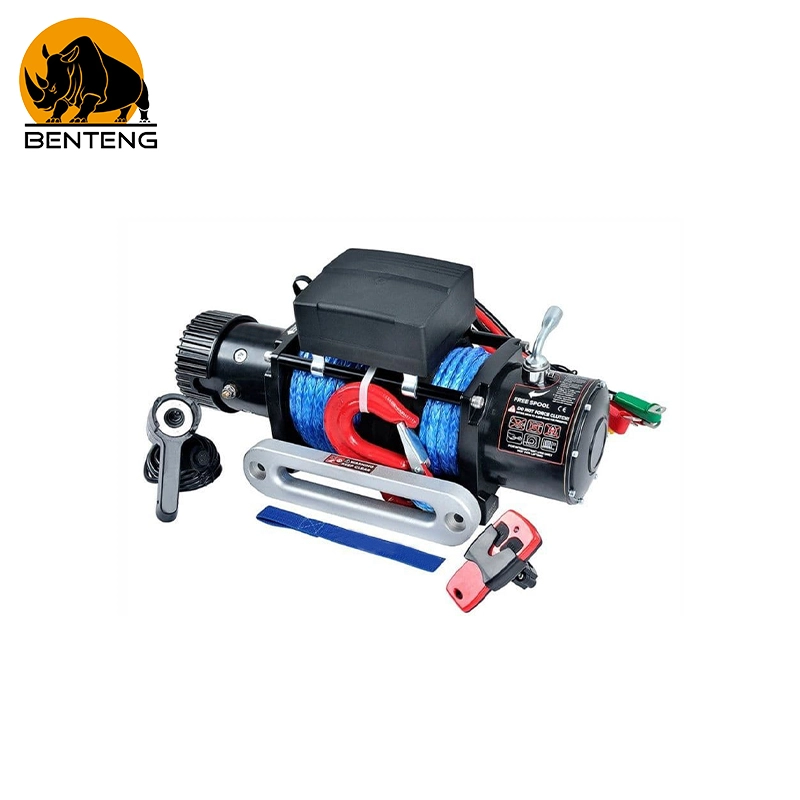
1. Understand the Electric Winch Before Operating It
An electric winch uses an electric motor to rotate a drum through a gear transmission. The drum stores and releases a rope, cable, or other pulling medium. Depending on its configuration, the winch can pull, position, tension, or lift a load. However, these applications do not always use the same winch design.
A horizontal pulling application creates different requirements from vertical lifting. The load path, brake system, rope arrangement, mounting structure, and control method all affect the operating procedure. Buyers should therefore define the application before selecting equipment.
A typical electric winch system includes the motor, gearbox, drum, rope, hook, fairlead, brake, control device, and electrical protection. Each component must work within its intended range. A high-capacity motor cannot compensate for a weak mounting frame. A strong wire rope cannot compensate for an unsuitable hook or damaged connection.
Check the Rated Capacity
The rated capacity defines the maximum permitted working load under specified conditions. It should never become a target that operators try to reach during every operation.
Actual line pull can change as the rope winds onto the drum. The effective drum radius increases as additional rope layers build up. This can reduce the available mechanical advantage at the outer layers. The actual pulling force can also change because of friction, slope, load condition, and redirection.
For example, a machine weighing 4,000 kg may move easily across a smooth floor. The same machine may require much more force when its wheels encounter an obstruction. If the load becomes stuck, the required force can rise sharply.
For this reason, operators should not keep increasing winch force when a load fails to move. Stop the operation and determine the cause of the resistance.
Understand Pulling Versus Lifting
The term electric winch covers a broad range of equipment. Some models focus on horizontal pulling and positioning. Other configurations support controlled lifting or material handling.
An electric hoist winch may include a braking arrangement designed for suspended loads. An electric lifting winch may also use a different rope configuration or control system from a general pulling winch.
A winch designed only for pulling should not automatically become a lifting device. Suspended loads create different risks because the load can fall if the holding system fails.
When selecting equipment, buyers should identify whether the load will move horizontally, vertically, along an incline, or through a combination of directions.
2. Inspect the Winch and Work Area Before Use
A pre-operation inspection should take place before the winch carries a working load. This inspection should cover the winch body, rope, hook, drum, mounting structure, electrical system, controls, and surrounding work area.
The inspection should not become a quick visual glance. Operators should know which components experience the highest loads and which parts can deteriorate through repeated use.
OSHA requires relevant rigging equipment to be inspected before use and removed from service when defective. It also requires equipment to remain within its recommended safe working load.
Inspect the Wire Rope
The wire rope deserves particular attention because damage can develop while the motor and gearbox continue to operate normally. A winch may appear functional while the rope has already developed a serious defect.
Inspect the rope for broken wires, kinks, crushing, corrosion, birdcaging, heat damage, flattened sections, and damaged end connections. Also inspect areas around the drum flange, fairlead, sheaves, and rope termination.
OSHA’s wire rope inspection requirements identify conditions including kinking, crushing, unstranding, birdcaging, significant corrosion, heat damage, and defective end connections as important inspection items.
Do not continue using a rope when its condition falls outside the manufacturer’s removal criteria or applicable safety requirements. The correct response is to stop the operation and have the rope assessed.
Inspect the Hook and Load Connection
The hook transfers the winch force to the load, so its condition matters as much as the rope. Inspect the hook for cracks, deformation, excessive wear, corrosion, and damage to the safety latch.
The connection point on the load also needs inspection. A hook with a suitable capacity does not make a weak lifting point safe. The connection must support the expected force and remain secure throughout movement.
Avoid side loading unless the hook and equipment manufacturer specifically permits it. Keep the hook aligned with the load direction whenever possible.
If shackles, slings, or other rigging components connect the winch to the load, inspect each component before operation. Every component should have a suitable rated capacity.
Inspect the Mounting Structure
The winch mounting structure transfers reaction force into the supporting equipment. This structure may include a steel frame, foundation, trailer, beam, vehicle chassis, or dedicated winch bracket.
Inspect mounting bolts, welds, base plates, support members, and anchor points. Look for cracks, deformation, corrosion, loose fasteners, or signs of previous overload.
Portable winches also require secure positioning during operation. OSHA’s marine terminal requirements state that portable winches should remain secured against accidental shifting while in use.
A winch that moves on its mounting structure can change the rope angle and create additional forces. The support should therefore remain stable throughout the working cycle.
Check the Electrical System
The electrical system should match the winch specification before operation begins. Check the supply voltage, cable condition, terminals, circuit protection, control device, and emergency stop where applicable.
Inspect cables for damaged insulation, exposed conductors, loose connections, corrosion, and signs of overheating. Do not bypass a fuse, circuit breaker, overload protection, or emergency stop to keep the machine running.
Repeated electrical trips can indicate excessive load, low voltage, poor connections, motor problems, or mechanical resistance. The cause should be identified before the winch returns to service.
3. How to Use an Electric Winch Step by Step
Once the inspection is complete, the operator can begin the winching process. The exact control sequence varies by model, so the manufacturer’s operating manual should remain the primary reference.
The general process follows a controlled sequence. First confirm the load and load path. Then connect the rope and remove slack. After that, apply power gradually and monitor the load until it reaches the required position.
Step 1: Confirm the Load and Operating Conditions
Start by identifying the actual load weight. Use documented weight information whenever possible rather than relying on estimates.
Include the weight of slings, shackles, hooks, spreader beams, or other equipment connected to the load when calculating the working load.
Then consider the movement conditions. A load moving on wheels may require less force than a load sliding across a rough surface. An inclined load may require additional pulling force because gravity acts against the direction of travel.
The load’s center of gravity also matters. An uneven load can rotate or shift when tension increases. This movement can change the load path and create additional forces.
For example, a 3-ton steel frame may fall within the capacity of a 5-ton winch. However, the frame may still become unstable if the connection point sits far from its center of gravity.
Step 2: Position the Winch and Load
Position the winch so the rope follows the intended load direction. A straight pulling path normally reduces unnecessary side forces and helps the rope wind evenly onto the drum.
If the application requires a change in direction, use properly rated sheaves, pulleys, or redirecting equipment. Do not force the rope around a sharp corner.
The winch mounting position should also provide sufficient access for inspection and maintenance. Operators should be able to reach the controls without entering the load path.
Step 3: Connect the Rope and Hook
Connect the rope or hook to the designated load attachment point. Make sure the connection cannot slip during operation.
Never improvise a connection because the correct attachment point is inconvenient. The load connection should follow the equipment manufacturer’s instructions and the applicable rigging requirements.
Wire rope should not be secured with knots. OSHA specifically prohibits knots for securing wire rope in covered material-handling applications and sets requirements for approved connections.
Keep hands away from the hook, rope, drum, and other pinch points while connecting or tensioning the system.
Step 4: Remove Slack Slowly
Take up slack at low speed before applying the full pulling force. This stage allows the operator to confirm that the hook, rope, and load connection remain aligned.
Watch the load while tension develops. If the load shifts unexpectedly, stop immediately and release the operation according to the equipment procedure.
Slack should never become an opportunity for a sudden full-power start. A controlled take-up reduces the chance of shock loading and gives the operator time to identify alignment problems.
Step 5: Start the Pull Gradually
Apply power gradually and maintain a steady movement speed. Avoid sudden acceleration and abrupt stops.
A static load can create much higher dynamic forces when the rope suddenly becomes tight. OSHA’s material-handling requirements prohibit shock loading for covered rigging applications.
For example, a machine that requires 2,500 kg of steady pulling force may generate a much higher transient force if the operator starts the winch at full power. That additional force can affect the rope, gearbox, hook, mounting frame, and load connection.
A controlled start protects the complete system rather than only the winch motor.
Step 6: Monitor the Load During Movement
Keep watching the load throughout the operation. Do not focus only on the winch drum.
Observe the rope, hook, load connection, mounting structure, and surrounding area. Listen for unusual motor or gearbox noise. Watch for excessive vibration or irregular rope movement.
If the load begins to rotate, tilt, bind, or move away from the intended path, stop the winch. Do not attempt to correct an unstable load while continuing to apply pulling force.
For remote-controlled systems, the operator should maintain a position that provides adequate visibility and avoids potential movement zones.
Step 7: Stop and Secure the Load
Stop the winch smoothly when the load reaches the required position. Do not rely on the motor alone unless the equipment is specifically designed and rated to hold the load in that condition.
For suspended loads, use the specified brake and mechanical securing method. The load should remain stable after the motor stops.
If the load requires additional support, install that support before removing tension from the winch system.
Step 8: Release Tension Carefully
Once the load is secured, release rope tension according to the equipment procedure.
Keep people away from the tensioned rope and connection points until the system reaches a safe condition. A loaded wire rope stores mechanical energy, and a failed connection can cause rapid movement.
Never place hands between the rope and drum, between a sling and load, or inside another potential pinch point.
4. How to Use Different Electric Winch Configurations
Different applications require different operating methods. Buyers should understand these differences before selecting equipment because capacity alone does not define a suitable winch.
A general pulling winch, heavy duty electric winch, and electric wire rope winch can share similar components while serving very different operating conditions.
Using a Heavy Duty Electric Winch
A heavy duty electric winch generally targets higher pulling forces or more demanding operating cycles. However, heavy duty construction does not mean unlimited operation.
Operators should check the rated capacity, line pull, duty cycle, motor temperature, gearbox condition, brake performance, and rope capacity.
Motor duty cycle deserves particular attention. A high-power motor can still overheat if an operator runs it continuously beyond its specified operating period.
For example, a winch may perform several short pulling cycles with cooling intervals. Running the same winch continuously at high load can produce a different thermal condition.
The mounting structure must also match the winch capacity. A high-capacity winch mounted to an undersized support can create a structural failure even when the motor operates normally.
Using an Electric Wire Rope Winch
An electric wire rope winch requires careful rope management. The rope should wind evenly across the drum without excessive slack, crossovers, or uncontrolled layering.
Inspect the rope before use and pay attention to sections that repeatedly pass over sheaves or contact guides. These areas can experience higher wear.
OSHA’s wire rope inspection rules identify broken wires, diameter reduction, corrosion, crushing, birdcaging, damaged end connections, and other conditions that require evaluation.
The rope termination also needs attention. Never replace a specified termination method with an improvised connection.
For industrial applications, rope inspection records can help identify recurring wear patterns. If the same rope section develops damage repeatedly, the operator should examine the sheave alignment, drum winding, load path, and operating method.
Using an Electric Lifting Winch
An electric lifting winch requires more controlled operation because the load can become suspended above the ground.
Before lifting, verify the load weight and the capacity of every component in the lifting system. This includes the rope, hook, sling, shackle, lifting point, and supporting structure.
Raise the load only as high as necessary. Keep personnel away from the suspended load and avoid side pulling.
For applications that require lifting rather than horizontal pulling, buyers can review Benteng’s electric lifting winch range and compare the configuration with the required load direction, capacity, rope arrangement, and duty cycle.
A lifting application also requires attention to brake performance. The brake must suit the intended load and operating cycle. If the equipment manual specifies a particular brake inspection procedure, follow it consistently.
5. Match the Operating Method to Key Technical Parameters
A reliable operating procedure starts with correct equipment selection. Buyers should therefore evaluate the main technical parameters before purchasing an electric winch.
The following table provides a practical reference for industrial decision-makers.
| Parameter | Why It Matters | What to Confirm |
|---|---|---|
| Rated capacity | Defines the permitted working load | Manufacturer’s rated capacity |
| Line pull | Determines actual pulling capability | Line pull by drum layer |
| Motor power | Influences pulling performance | Rated motor output |
| Voltage | Must match the power supply | Specified operating voltage |
| Duty cycle | Controls operating duration | Continuous or intermittent duty |
| Rope diameter | Determines rope compatibility | Specified rope size |
| Rope length | Defines working travel | Required rope capacity |
| Drum size | Affects rope storage and line pull | Drum dimensions and layers |
| Brake system | Supports controlled stopping and holding | Brake type and rated function |
| Control system | Determines operator control | Pendant, remote, or control panel |
| Mounting structure | Transfers reaction force | Mounting method and support strength |
| Operating environment | Affects equipment durability | Dust, moisture, corrosion, and temperature |
These parameters should be considered as a complete system. Selecting equipment only from motor power or maximum line pull can produce an unsuitable configuration.
For example, two winches may have similar rated pulling force but different duty cycles. One may suit occasional operation, while another may support repeated industrial cycles. The correct choice depends on how the equipment will operate rather than the capacity number alone.
The power supply also affects performance. A winch designed for one voltage should not operate outside its specified electrical range. Long power cables can also create voltage drop, so cable size and cable length should match the electrical requirements.
Common Mistakes When Using an Electric Winch
Many operating problems come from incorrect assumptions rather than complicated mechanical failures.
The first common mistake involves capacity. Operators sometimes assume that a winch can pull a load simply because the load weight appears below the rated capacity. Actual pulling conditions can change the required force significantly.
The second mistake involves rope alignment. Side pulling can create uneven winding and additional stress on the rope, fairlead, and mounting structure. The winch should remain aligned with the intended load path whenever possible.
The third mistake involves sudden loading. A full-power start can create dynamic forces that exceed the steady pulling force. Operators should remove slack first and then apply power gradually.
Another common mistake involves ignoring the drum layers. Line pull can vary as the rope builds up on the drum. Buyers should review manufacturer data when the application requires a specific pulling force at a particular rope layer.
Electrical protection also deserves attention. Repeated breaker trips should not lead to bypassing the protective device. The operator should investigate overload, low voltage, poor connections, motor problems, or mechanical resistance.
Finally, operators sometimes focus on the winch while ignoring the supporting structure. The foundation, mounting frame, anchor points, and load connection must all withstand the forces generated during operation.
Maintenance After Electric Winch Operation
Maintenance begins after the load reaches its destination. A post-operation inspection can identify damage before the next working cycle.
Inspect the rope for new wear, broken wires, corrosion, kinks, crushing, or deformation. Check the hook and end connection for damage. Examine the drum for irregular winding or rope accumulation.
The mounting structure should also receive attention. Check bolts, welds, brackets, and anchor points for movement or deformation. If the winch has operated near its rated capacity, a more detailed inspection may be appropriate.
Electrical components require similar attention. Check terminals, cables, connectors, controls, and protective devices. Moisture and corrosion can cause gradual electrical problems, particularly in outdoor or coastal environments.
Follow the manufacturer’s lubrication schedule for components that require lubrication. Do not lubricate sealed components unless the manufacturer specifies the procedure.
For frequently used equipment, maintain inspection records. A simple record can include operating hours, load conditions, rope condition, maintenance work, and identified defects.
OSHA’s wire rope rules provide specific inspection intervals for equipment covered by those requirements, including shift, monthly, and annual inspection provisions. The exact requirement depends on the equipment and regulatory scope.
FAQ About Using an Electric Winch
How do I use an electric winch for the first time?
Start by reading the manufacturer’s operating instructions and identifying the rated capacity. Inspect the winch, rope, hook, mounting structure, electrical system, and work area before connecting the load.
Connect the load correctly and remove slack at low speed. Apply power gradually and monitor the rope and load throughout the movement. Stop immediately if the load behaves unexpectedly.
Can an electric winch pull more than its rated capacity?
No. Operators should not exceed the manufacturer’s rated capacity to move a stuck or obstructed load.
If the winch cannot move the load, stop the operation and determine why. The cause may involve excessive friction, incorrect rigging, an obstruction, poor alignment, or an unsuitable winch configuration.
How long can an electric winch run continuously?
The answer depends on the motor and duty classification. Some winches use intermittent-duty motors, while other configurations support longer operating periods.
Operators should follow the manufacturer’s duty-cycle specification. Repeated operation beyond the specified cycle can increase motor temperature and accelerate component wear.
Can I use an electric winch for lifting?
Only when the winch is designed and rated for lifting. A pulling winch should not automatically become a lifting device.
For lifting applications, check the rated capacity, brake system, rope configuration, hook, lifting point, and applicable requirements. The supporting structure must also handle the expected load.
What should I inspect on an electric wire rope winch?
Inspect the wire rope, hook, end connection, drum, fairlead, brake, gearbox, motor, mounting structure, control system, and electrical connections.
Pay particular attention to broken wires, corrosion, kinks, crushing, birdcaging, heat damage, and damaged end connections. OSHA identifies these conditions as relevant wire rope inspection criteria for covered equipment.
Can I stand beside the wire rope while the winch operates?
Personnel should stay clear of the direct load path and potential movement zones around a tensioned rope.
The operator should also maintain a position that provides adequate visibility without entering the potential travel path of the load or rope.
What should I do if the winch stops while pulling a load?
Stop and secure the situation before troubleshooting. Check for overload, mechanical obstruction, low voltage, electrical faults, thermal protection, rope problems, or incorrect alignment.
Do not bypass a circuit breaker or other protective device. Repeated trips can indicate an underlying equipment or application problem.
How can I prevent wire rope damage?
Keep the rope aligned with the drum and avoid unnecessary side loading. Wind the rope evenly and inspect areas that pass repeatedly over sheaves or guides.
Use the rope size and termination method specified by the winch manufacturer. Remove damaged rope from service according to the manufacturer’s criteria and applicable regulations.
What information should I provide when buying an electric winch?
Provide the load weight, required line pull, movement direction, rope length, rope diameter, operating speed, voltage, duty cycle, mounting arrangement, and environmental conditions.
For lifting applications, also provide the lifting height and required brake or holding function. These details allow the supplier to evaluate the winch configuration rather than selecting equipment from capacity alone.
Is a heavy duty electric winch suitable for every industrial application?
No. A heavy duty design does not automatically suit every industrial application.
The buyer should match capacity, line pull, duty cycle, rope system, motor voltage, brake arrangement, mounting structure, control method, and operating environment with the actual job.
When should I stop using an electric winch?
Stop using the winch when you identify damaged rope, hook deformation, structural damage, abnormal noise, electrical faults, brake problems, uncontrolled movement, or another condition outside the manufacturer’s operating requirements.
Do not continue operation simply because the winch can still move the load. A functional motor does not prove that the complete winching system remains safe.