
Small Electric Hoists: Features and Applications
July 6, 2026
In workshops, warehouses, and construction sites, many lifting tasks involve loads that cannot be moved safely through manual labor alone. Heavy components, machinery parts, and industrial materials often require reliable lifting equipment to improve efficiency and reduce workplace risks.
This is where a small electric hoist provides a practical solution. Compact, flexible, and easy to operate, it helps businesses complete lifting tasks with less physical effort while maintaining accurate load control.
Compared with large crane systems, small electric hoists require less installation space and provide greater flexibility for different working environments. They are widely used in factories, maintenance workshops, warehouses, and small production facilities.
As part of modern electric lifting hoist solutions, small electric hoists provide efficient lifting performance for applications requiring reliable operation without complex equipment investment.
Understanding the differences between electric chain hoists and wire rope hoists is essential for selecting the right lifting solution.
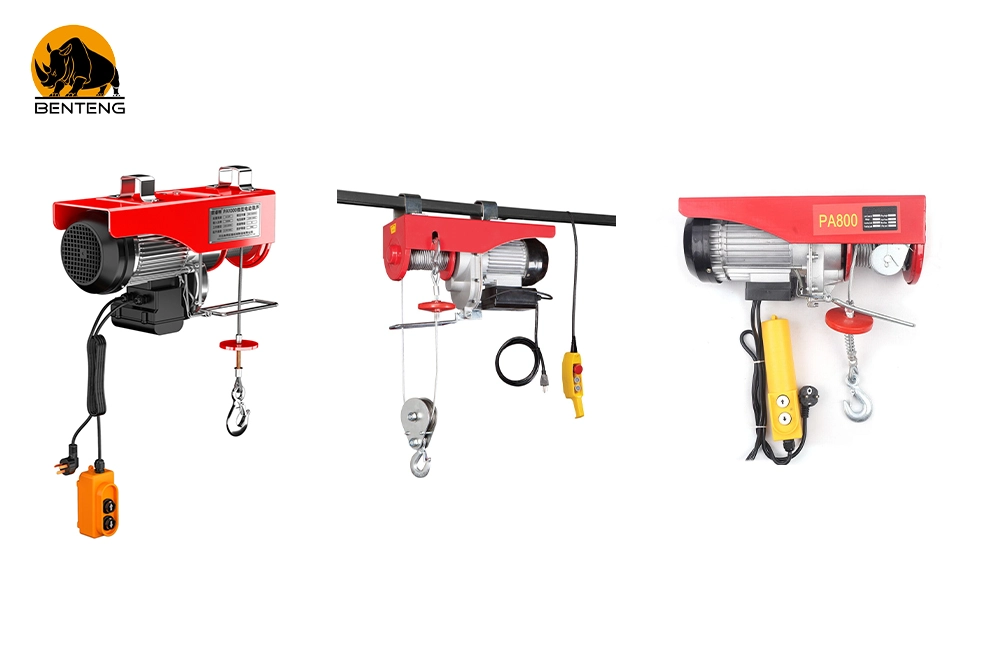
What Is an Electric Chain Hoist?
An electric chain hoist is a compact lifting device that uses a metal chain as the lifting medium. Driven by an electric motor, the chain moves through the lifting mechanism to raise or lower loads smoothly and accurately.
One of the main advantages of chain hoists is their durability. The high-strength load chain can withstand frequent operation in demanding environments, including workshops, production lines, and industrial facilities.
Electric chain hoists are also known for their precise load control. They are suitable for applications where operators need accurate positioning and stable lifting performance.
Typical advantages include:
- Compact structure
- Reliable lifting performance
- Easy installation
- Low maintenance requirements
- Suitable for frequent lifting operations
For many small and medium-sized industrial applications, electric chain hoists provide a balanced combination of performance, reliability, and cost efficiency.
What Is a Wire Rope Hoist?
A wire rope hoist uses a steel wire rope wound around a drum to lift and lower heavy loads. Compared with chain hoists, wire rope hoists are designed for higher lifting speeds, greater lifting heights, and heavier industrial applications.
The drum-based lifting system allows smooth operation over longer distances, making wire rope hoists suitable for large factories, construction projects, and heavy-duty lifting environments.
Key advantages include:
- Higher lifting capacity
- Greater lifting height
- Faster lifting speed
- Smooth operation
- Suitable for continuous-duty applications
Although wire rope hoists offer stronger performance for demanding applications, they typically require more regular inspection and maintenance to ensure safe operation.
Electric Chain Hoist vs Wire Rope Hoist: Key Differences
Although both types of hoists perform lifting tasks, their designs and application advantages are different.
| Feature | Electric Chain Hoist | Wire Rope Hoist |
|---|---|---|
| Lifting Medium | Steel chain | Wire rope |
| Design | Compact and flexible | Heavy-duty industrial design |
| Lifting Speed | Moderate | Higher speed |
| Lifting Height | Suitable for standard applications | Suitable for greater heights |
| Maintenance | Relatively simple | Requires wire rope inspection |
| Common Uses | Workshops, factories, maintenance | Heavy industry, construction, large facilities |
In simple terms, electric chain hoists are ideal for flexible and reliable lifting, while wire rope hoists are better suited for heavy-duty operations requiring higher performance.
Main Structure of Small Electric Hoists
Although small electric hoists have a compact appearance, they contain several important components that work together to achieve safe and efficient lifting.
Electric Motor
The motor provides the power required for lifting and lowering operations. High-quality motors ensure stable performance during repeated use.
Gearbox System
The gearbox controls lifting speed while increasing torque output, allowing the hoist to handle heavy loads efficiently.
Lifting Mechanism
Depending on the design, the lifting mechanism uses either a chain or wire rope to support and move the load.
Load Hook
The hook connects the hoist to the load and is designed with safety features to prevent accidental release.
Braking System
The brake system automatically holds the load when operation stops, improving safety during lifting.
Control System
Pendant controllers or remote controls allow operators to control lifting, lowering, and stopping functions accurately.
Together, these components convert electrical energy into controlled mechanical movement.
How to Choose the Right Electric Hoist?
Selecting a suitable small electric hoist requires consideration of several important factors.
Lifting Capacity
Capacity determines the maximum weight the hoist can safely lift. Always select a model with sufficient capacity according to the actual working load.
A properly selected capacity improves both safety and equipment service life.
Lifting Height
Consider the required lifting distance before choosing a hoist.
Electric chain hoists are generally suitable for standard lifting heights, while wire rope hoists are preferred for higher lifting requirements.
Working Frequency
For occasional lifting tasks, a compact electric chain hoist may provide sufficient performance.
For continuous industrial operation, a heavy-duty hoist designed for frequent use may be more suitable.
Installation Space
Limited workshop space often requires compact lifting equipment. Small electric hoists are particularly suitable where flexibility and easy installation are important.
Maintenance Requirements
Regular inspection of motors, brakes, chains, and wire ropes helps ensure safe operation and extends equipment lifespan.
When Should You Choose an Electric Chain Hoist?
An electric chain hoist is a suitable choice when you need:
- Reliable daily lifting performance
- Compact equipment design
- Easy operation and maintenance
- Flexible use in workshops and production areas
Common applications include:
- Machine assembly
- Equipment maintenance
- Workshop material handling
- Small production lines
- Warehouse lifting tasks
When Should You Choose a Wire Rope Hoist?
A wire rope hoist is recommended when lifting requirements involve:
- Heavier loads
- Greater lifting heights
- Higher operating speeds
- Continuous industrial operation
Typical applications include:
- Large manufacturing plants
- Construction projects
- Heavy equipment installation
- Industrial production facilities
Industrial Applications of Small Electric Hoists
Small electric hoists are widely used across multiple industries.
Manufacturing
They assist with assembly operations, machine positioning, and material movement between production areas.
Warehousing
They support lifting and handling tasks for heavy goods, equipment parts, and warehouse materials.
Construction
They help lift tools, components, and construction materials where flexible lifting solutions are required.
Automotive Maintenance
Workshops use electric hoists for handling engines, machinery parts, and repair components.
Equipment Maintenance
Maintenance teams rely on electric hoists for equipment installation, repair, and replacement operations.
Regardless of the industry, their purpose remains the same: improving lifting efficiency while reducing manual workload.
Frequently Asked Questions
How long does a small electric hoist last?
With proper maintenance and correct operation, a small electric hoist can provide years of reliable service. Service life depends on usage frequency, working conditions, and maintenance quality.
Can a small electric hoist be used outdoors?
Yes. However, suitable protection measures should be considered according to weather conditions and operating environments.
Is an electric hoist difficult to operate?
No. Most electric hoists are designed with user-friendly controls, allowing operators to learn basic operation quickly.
Can one electric hoist handle all lifting tasks?
No. Different applications require different capacities, lifting heights, and hoist designs. Choosing the correct model is essential for safe and efficient operation.
Conclusion
Small electric hoists provide an efficient and flexible solution for modern material handling operations. Although compact in size, they deliver reliable lifting performance for workshops, warehouses, factories, and construction sites.
Whether choosing an electric chain hoist for flexibility or a wire rope hoist for heavy-duty performance, the right equipment selection depends on load requirements, working conditions, and operational goals.
A properly selected electric hoist can become a valuable part of industrial workflows by improving productivity, enhancing safety, and reducing manual labor.