
What Is an Electric Wire Rope Hoist and How Does It Function in Heavy Industry?
November 6, 2026
Heavy-duty material handling operations require robust lifting machinery capable of vertical displacement for massive loads across expansive manufacturing floors. An electric wire rope hoist represents a primary lifting mechanism that utilizes flexible steel wire wound onto a grooved drum to elevate, lower, and position heavy industrial cargo. Industrial facilities, fabrication workshops, and warehousing hubs rely on these high-capacity units because they handle loads ranging from one ton to over fifty tons with exceptional structural stability. Unlike chain-based counterparts, wire rope systems accommodate longer lifting heights, faster operating speeds, and demanding multi-shift cycles without excessive mechanical wear. Plant engineers and procurement managers must evaluate mechanical design principles, operational advantages, and structural configurations to select the correct lifting unit for their specific facility layout.
Core Design and Mechanical Architecture
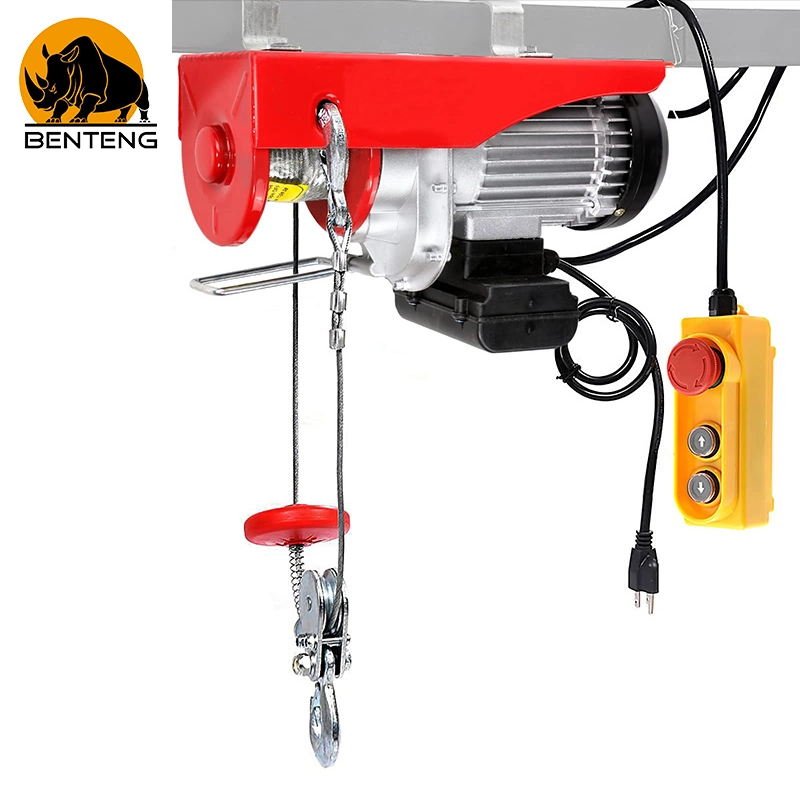
The internal architecture of a wire rope hoisting unit consists of several precision-engineered subassemblies working in synchronized coordination. The electric motor provides rotational torque, transferring power through a multi-stage enclosed gearbox to the rope drum. Grooves machined into the steel drum guide the wire rope neatly during winding, preventing overlap jamming and minimizing friction wear. An advanced braking system, typically combining a motor brake and a mechanical load brake, engages automatically whenever power is interrupted, holding static loads securely in place. The bottom block assembly features a forged steel load hook suspended on needle bearings, allowing smooth rotation under full tension. Safety devices such as upper and lower limit switches prevent over-travel, protecting the motor and structural components from accidental impact damage.
Key Operational Advantages in Industrial Applications
Industrial environments demand lifting equipment that maximizes productivity while maintaining uncompromising safety standards across continuous work cycles. Wire rope systems deliver superior lifting speeds and smoother acceleration curves compared to manual or standard chain alternatives, reducing load swing during transit. The high tensile strength of alloy steel wire rope provides exceptional durability when handling abrasive materials or operating in elevated temperature zones. These units integrate seamlessly with overhead bridge cranes, monorail systems, and jib cranes, offering multi-directional mobility across large workspaces. Facilities upgrading their production lines often explore the electric wire rope hoist to compare lifting capacities, drum configurations, and duty cycle ratings.
| Feature Comparison | Electric Wire Rope Hoist | Electric Chain Hoist |
| Standard Capacity Range | 1 ton to 50+ tons | 250 kg to 5 tons (typically) |
| Lifting Speed | High speed, dual-speed options available | Moderate speed |
| Lifting Height | Exceptional height capacity for tall facilities | Limited by chain container volume |
| Rope vs Chain Wear | Gradual wire strand wear visible during checks | Link pitch elongation requiring precise gauge tests |
Caption: Technical comparison between electric wire rope hoists and chain-based hoisting units.
Structural Configurations and Mounting Options
Engineering teams configure wire rope systems in multiple mounting styles to accommodate diverse facility layouts and overhead clearance constraints. Low headroom trolleys feature a compact design that raises the bottom hook closer to the I-beam flange, maximizing usable vertical lift space in restricted buildings. Foot-mounted units allow stationary installation on fixed platforms, winching applications, or specialized gantry frameworks. Double-girder trolley hoists distribute heavy loads across two bridge rails, providing superior stability and balanced weight distribution for massive industrial components.
Reviewing the electric hoist helps technical buyers identify specific mounting geometries that match existing crane bridge dimensions and runway specifications.
Routine Maintenance and Safety Protocols
Maintaining operational longevity requires structured maintenance routines, thorough lubrication schedules, and adherence to established safety standards like ASME B30.16. Technicians must inspect the entire length of the wire rope weekly for broken strands, corrosion, kinks, or flattening caused by sheave friction. The drum and sheave grooves require examination to ensure proper alignment and prevent premature abrasion on outer wire layers. Braking mechanisms need regular air-gap measurements and friction disc evaluations to prevent load slippage during heavy lifts. Operators must perform pre-shift visual checks, testing emergency stop buttons, limit switches, and pendant controls before executing any overhead load movement.
Contact Benteng Hoist for professional engineering consultations and reliable heavy-duty lifting equipment tailored to your facility.
Frequently Asked Questions
What is the typical lifting capacity of an electric wire rope hoist?
These units generally handle loads from one ton up to fifty tons or more, making them ideal for heavy manufacturing, steel mills, and large-scale warehousing.
How do wire rope systems compare to chain hoists regarding lifting height?
Wire rope units accommodate much greater lifting heights because excess cable stores neatly in the grooved drum, whereas chain hoists require large chain containers that limit vertical travel.
Why is rope spooling management critical during operation?
Proper spooling prevents wire crossover and pinching on the drum, which causes severe abrasion, structural weakening, and premature cable failure.
What maintenance tasks are most important for wire rope longevity?
Regular lubrication with manufacturer-approved grease, routine tension checks, and inspections for broken strands or corrosion are essential for long-term reliability.
Brand Introduction
Benteng Hoist operates as a premier manufacturing enterprise specializing in the engineering, production, and global export of heavy-duty industrial lifting equipment. The company maintains a modern manufacturing facility equipped with automated production lines, computer numerical control machining centers, and strict load-testing rigs to ensure uncompromising quality standards. Serving clients across more than fifty countries, Benteng Hoist provides reliable electric hoists, manual hoist blocks, winches, permanent lifting magnets, hydraulic jacks, rigging hardware, and specialized material handling equipment backed by direct factory support and international certifications.
References
- Occupational Safety and Health Administration. (2024). OSHA Standard 1910.179 – Overhead and Gantry Cranes. U.S. Department of Labor. https://www.osha.gov/
- American Society of Mechanical Engineers. (2023). ASME B30.16-2022: Overhead Hoists (Underhung). ASME Standards. https://www.asme.org/