Who Manufactures the Best Industrial Lifting Equipment for Heavy-Duty Material Handling Operations?
September 9, 2026
Selecting the top manufacturer of lifting machinery depends heavily on engineering precision, material durability, and rigorous quality certification standards. Industrial buyers looking for reliable material handling systems evaluate manufacturers based on gear reduction ratios, motor thermal protection ratings, and brake reliability. The top manufacturers produce robust lifting devices that withstand harsh operating environments without suffering premature mechanical failure. Procurement managers analyze these critical performance metrics to identify suppliers who deliver consistent lifting power and long-term operational safety.
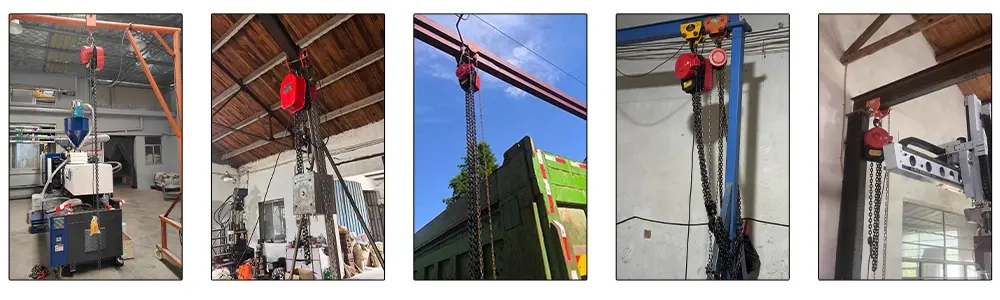
For example, a busy automotive assembly plant requires an industrial electric hoist capable of executing hundreds of lifting cycles daily without overheating its drive motor. Similarly, a marine shipyard relies on heavy-duty lifting machinery to position multi-ton steel ship components with millimeter precision during hull assembly. Another practical instance involves steel service centers utilizing specialized rigging systems to lift raw metal coils safely across expansive warehouse bays. Evaluating these real-world applications helps procurement specialists choose manufacturing partners who engineer equipment matching exact load capacities and duty cycles.
Engineering Standards and Gearbox Durability
Gearbox construction dictates how efficiently lifting machinery transmits motor torque to the wire rope or load chain drum. Top-tier manufacturers utilize case-hardened alloy steel gears machined to exact tolerances to minimize mechanical friction and noise. High-quality gear trains distribute mechanical stress evenly across multiple tooth contact points during heavy lifting operations. Poorly engineered gearboxes suffer from rapid tooth wear, excessive backlash, and catastrophic mechanical binding under full load conditions.
Plant engineers examine the thermal dissipation design of the gearbox housing to ensure continuous operation without lubricant breakdown. Manufacturers incorporate precision ball and roller bearings to support rotating shafts and reduce rotational resistance during lifting cycles. Selecting equipment with robust gearbox architecture prevents unexpected downtime on busy manufacturing lines and lowers ongoing maintenance expenses.
- Utilize case-hardened alloy steel gears machined to strict dimensional tolerances.
- Incorporate precision roller bearings to minimize rotational friction and heat buildup.
- Design robust gearbox housings with adequate surface area for thermal dissipation.
- Maintain strict lubrication standards to protect internal gear teeth from premature wear.
Motor Performance and Thermal Management Systems
Electric drive motors provide the primary mechanical energy required to lift heavy industrial loads vertically. Industrial applications demand high-torque motors equipped with class F or class H insulation systems to handle thermal stress. Operating heavy loads continuously generates internal heat that can degrade motor winding insulation if cooling systems prove inadequate. Leading manufacturers integrate internal thermal overload sensors that shut down power before winding temperatures reach damaging levels.
Duty cycle ratings dictate how long an electric motor can run within a given time frame without overheating. Engineers must match motor duty classifications to specific operational demands to prevent premature electrical failure on the factory floor. Ventilated motor cowlings and external cooling fans enhance heat dissipation during intensive multi-shift manufacturing operations.
- Install high-torque motors equipped with class F or H winding insulation.
- Integrate internal thermal sensors to prevent motor burnout during heavy use.
- Calculate exact duty cycle requirements based on daily factory lift frequency.
- Utilize external cooling fans to improve thermal management during continuous operation.
Braking Mechanisms and Load Safety Controls
Braking systems represent the most critical safety feature on any lifting device used in modern industrial facilities. Reliable mechanical load brakes hold suspended loads securely even if the primary electrical power supply fails suddenly. Electromagnetic disc brakes engage automatically whenever the control pendant or radio remote signal releases the motor contactor. Dual braking systems provide essential redundancy for critical overhead lifts in busy manufacturing environments.
Modern lifting units also incorporate electromechanical limit switches to prevent the hook block from over-traveling upward or downward. These safety limit switches cut power instantly before the hook mechanism strikes the drum or cable guide. Operators rely on these fail-safe control systems to protect personnel and valuable inventory from dropping accidents.
- Install dual mechanical and electromagnetic braking systems for maximum safety redundancy.
- Incorporate upper and lower limit switches to prevent dangerous over-travel conditions.
- Test emergency stop response times regularly during routine maintenance inspections.
- Ensure brake torque ratings exceed maximum rated load capacity by safe margins.
Cable Drum and Wire Rope Integrity
The wire rope and cable drum assembly manages the physical transfer of weight from the hook to the frame. Precision-machined rope drums feature deep helical grooves that guide the wire rope smoothly without overlapping. Improper drum grooving causes severe wire rope crushing, accelerated strand wear, and sudden cable snapping under heavy loads. Manufacturers use high-tensile carbon steel for drums and select aircraft-grade wire rope with high breaking strength ratings.
Tension rollers and cable guides keep the wire rope seated correctly within the drum grooves during slack-line conditions. Inspecting wire rope for broken wires, corrosion, and diameter reduction remains an essential daily maintenance task for operators. Using durable materials for the drum assembly extends component lifespan and maintains safe lifting operations over years of service.
- Machine helical grooves into steel drums to prevent wire rope overlapping.
- Select high-tensile wire rope with certified breaking strength ratings for safety.
- Install spring-loaded cable guides to maintain proper rope tension on the drum.
- Conduct regular visual inspections to identify frayed wire strands or surface wear.
Ready to upgrade your industrial material handling infrastructure? Contact our team today to discuss your technical specifications and lifting requirements.
Structural Framework and Rigging Compatibility
The main structural frame supports the entire weight of the lifting mechanism, motor assembly, and suspended loads safely. Manufacturers fabricate rigid frames using heavy-gauge structural steel plates welded by certified technicians to withstand mechanical stress. The frame design must distribute dynamic load forces evenly onto the overhead trolley or monorail support beam. Engineers verify structural integrity through finite element analysis simulations before approving any new lifting design for production.
Compatibility with existing bridge cranes and runway beams ensures seamless installation without requiring expensive structural building modifications. A well-designed motorized hoist balances weight distribution evenly across all trolley wheels to prevent premature track wear. Modular frame construction also simplifies routine maintenance access for servicing internal mechanical components.
- Fabricate rigid main frames using heavy-gauge structural steel plates.
- Distribute dynamic load forces evenly across overhead monorail support beams.
- Balance equipment weight across trolley wheels to minimize runway track wear.
- Design modular access panels for rapid inspection of internal drive components.
Table 1: Industrial Lifting Equipment Technical Comparison
| Technical Parameter | Standard Duty Specification | Heavy Duty Specification |
| Motor Insulation Class | Class F (155°C limit) | Class H (180°C limit) |
| Duty Cycle Rating | 30% to 40% ED rating | 60% to 100% ED rating |
| Braking System | Single electromagnetic brake | Dual mechanical and magnetic brakes |
| Enclosure Protection | IP54 dust and moisture rating | IP55 or IP66 severe environment |
Integrating an advanced electric lifting hoist into an existing factory layout requires careful calculation of headroom clearances and bridge capacities. Plant managers coordinate with rigging engineers to ensure that mounting brackets and push-pull trolleys match beam flange widths. Proper installation prevents binding during traverse movements and ensures smooth load positioning across the work zone.
Routine maintenance protocols ensure that industrial hoisting equipment maintains peak mechanical efficiency throughout its operational lifespan. Technicians check gearbox oil levels, measure brake pad thicknesses, and test electrical control circuits during scheduled monthly shutdowns. Documenting all maintenance activities creates a reliable service history and satisfies workplace safety audit requirements.
- Perform monthly checks on gearbox fluid levels and lubricant condition.
- Measure brake disc wear against manufacturer tolerance specifications regularly.
- Inspect electrical contactors and terminal connections for signs of arcing.
- Lubricate wire ropes and chain links with recommended industrial greases.
Frequently Asked Questions
What factors determine the lifting capacity of industrial equipment?
Lifting capacity depends on motor torque output, gearbox gear ratios, wire rope diameter, and structural frame strength ratings.
Why is duty cycle an important consideration for buyers?
Duty cycle defines how long a motor can operate within a specific timeframe without overheating or sustaining winding damage.
How do dual braking systems improve operational safety?
Dual braking systems provide redundancy, ensuring that a suspended load remains secure even if the primary electrical power fails.
What maintenance tasks extend the lifespan of lifting machinery?
Regular lubrication, monthly brake inspections, wire rope checks, and oil analysis prevent premature component wear and failure.
Benteng manufactures reliable material handling machinery and engineered lifting systems for global industrial facilities and manufacturing plants. Our production facilities specialize in building durable heavy duty electric hoist solutions that meet rigorous international safety and quality standards. We manage every phase of the manufacturing process, from raw structural steel cutting to final electrical load testing. Our engineering teams help B2B procurement managers secure dependable equipment tailored to demanding operational environments.
References:
- Occupational Safety and Health Administration. Overhead and Gantry Cranes Safety Standards. https://www.osha.gov
- Crane Manufacturers Association of America. Specifications for Top Running Bridge and Gantry Type Electric Overhead Traveling Cranes. https://www.mhi.org/cmaa
- International Organization for Standardization. Cranes and Hoists Safety Standards. https://www.iso.org