
How Does an Electric Chain Hoist Work in Industrial Lifting Applications?
September 25, 2026
An electric chain hoist works by converting electrical energy into controlled lifting motion through a motor, gearbox, load chain, and hook system. When an operator activates the control pendant, the motor turns the transmission system and rotates a chain wheel. The chain wheel engages the load chain and moves it through the hoist body. This action raises or lowers the connected load at a controlled speed. A braking system holds the load when the lifting command stops. For industrial buyers, understanding this working process helps with equipment selection, installation planning, load matching, and maintenance.
The basic principle looks simple, but the actual lifting process involves several coordinated components. Motor power must match the rated load and lifting speed. The gearbox must transfer torque without creating excessive mechanical stress. The chain wheel must engage the chain correctly. The brake must hold the suspended load under operating conditions.
An electric chain hoist can therefore serve as more than a powered lifting device. It becomes part of a material handling system. Depending on the installation, it may operate from a fixed suspension point, a monorail, or a trolley system.
For factories, workshops, warehouses, assembly plants, and maintenance facilities, the main purchasing question is not simply how much weight a hoist can lift. Buyers also need to consider lifting height, duty cycle, operating frequency, available power, working environment, control method, installation structure, and required travel.
This guide explains how an electric chain hoist works from the electrical input to the final lifting movement. It also examines major components, load transmission, braking, control systems, duty requirements, and practical selection factors.
What Are the Main Components of an Electric Chain Hoist?
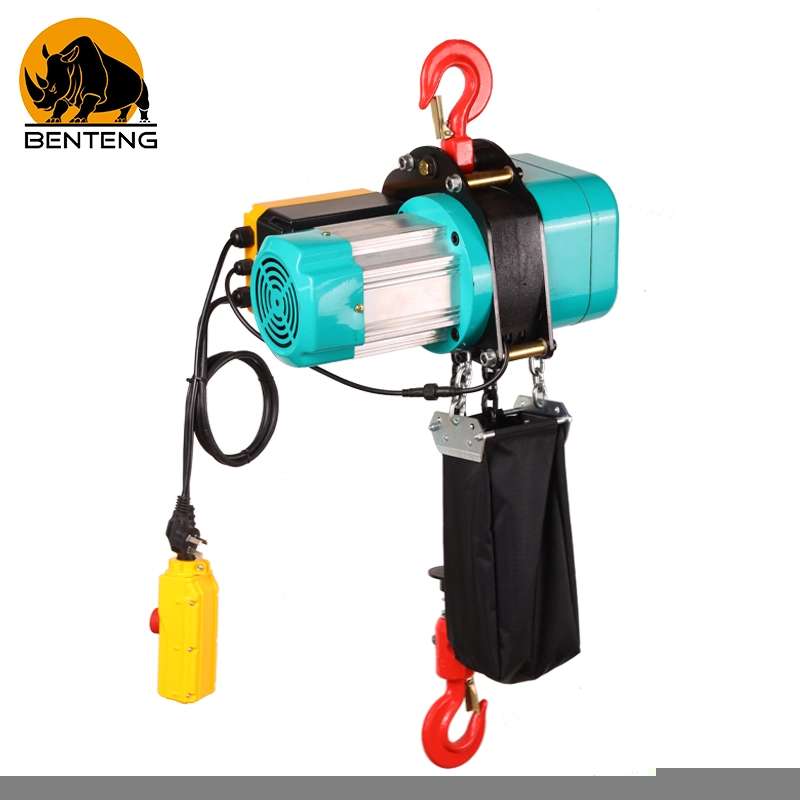
An electric chain hoist contains several mechanical and electrical systems that work together. Each component performs a specific function within the lifting cycle. A failure in one system can affect the entire lifting operation.
Understanding these components helps procurement teams compare equipment beyond motor power or rated capacity.
Electric Motor
The electric motor provides the mechanical power required to lift the load. Electrical energy enters the motor through the hoist control system. The motor converts this energy into rotational motion.
Most industrial hoists use motors designed for repeated starting and stopping. The required motor characteristics depend on load capacity, lifting speed, duty cycle, and operating environment.
Motor selection also affects heat generation. Frequent lifting cycles create more thermal demand than occasional maintenance lifting. A factory with continuous material handling therefore needs a different motor configuration from a workshop with intermittent use.
Gearbox and Transmission
The motor normally rotates faster than the load chain should move. A gearbox reduces motor speed and increases usable torque.
The gearbox transfers motor rotation toward the chain wheel. Its gear ratio determines part of the relationship between motor speed and lifting speed.
For example, a motor may rotate at a relatively high speed. The gearbox reduces that speed before the movement reaches the chain wheel. The resulting torque allows the hoist to lift a much heavier load.
The transmission system must also control mechanical stress. Poor gear engagement can increase noise, vibration, wear, and heat.
Load Chain and Chain Wheel
The load chain directly carries the suspended load. A chain wheel, also called a load sheave, engages the chain links.
As the chain wheel rotates, it pulls the chain through the hoist body. One direction raises the load. The opposite direction lowers it.
The chain geometry must match the chain wheel. Proper engagement helps maintain controlled movement during repeated lifting cycles.
ISO 3077 specifies requirements for fine-tolerance hoist chain used with manually operated and power-driven chain hoists. The standard covers round steel short-link chain within specified size ranges.
Load Hook and Hook Block
The load hook connects the hoist to the lifting attachment or load. Hook design depends on the hoist configuration and rated capacity.
Many industrial lifting systems use a safety latch at the hook opening. The latch helps prevent unintended release of properly connected lifting accessories.
The hook also transfers the lifting force into the load connection. Buyers should therefore consider hook capacity, throat opening, latch design, and compatibility with slings or other attachments.
Brake System
The brake controls the load when the motor stops. It also helps prevent uncontrolled downward movement.
An electric chain hoist commonly uses an electromagnetic braking arrangement. When the lifting command stops, the brake engages and holds the load.
Brake performance matters during both normal operation and emergency stopping. The brake must correspond with the hoist’s rated operating conditions.
Control System
The control system determines how operators command lifting and lowering. A pendant control is common for many industrial applications.
Typical commands include:
- Up
- Down
- Emergency stop
- Optional trolley travel
- Optional multi-speed functions
Some systems also include upper and lower limit functions. These features help restrict chain travel within the intended operating range.
How Does the Lifting Cycle Work Step by Step?
The lifting cycle begins when the operator sends a command through the control system. The electrical circuit then activates the motor in the required direction.
Although the process happens quickly, several stages occur between pressing the button and moving the load.
Step 1: The Operator Sends a Command
The operator presses the lifting button on the pendant or control station.
The control circuit sends electrical power to the motor. The control system also determines the direction of rotation.
For a lifting command, the motor rotates in the direction required to drive the chain wheel upward.
Step 2: The Motor Generates Rotation
The motor converts electrical energy into mechanical rotation.
Motor torque then enters the gearbox. The motor does not directly pull the chain. Instead, the transmission system changes the motor’s speed and torque.
This arrangement allows a relatively compact motor to generate the torque required for industrial lifting.
Step 3: The Gearbox Increases Usable Torque
The gearbox reduces rotational speed and increases torque.
Torque then reaches the chain wheel. The exact mechanical arrangement depends on the hoist design.
This stage explains why motor speed alone cannot determine lifting capability. A motor can rotate quickly while still producing the required lifting force after transmission.
Step 4: The Chain Wheel Moves the Load Chain
The chain wheel engages the load chain and pulls it through the hoist.
As the chain moves upward through the lifting mechanism, the connected hook rises.
The chain collection system stores the unused chain inside a chain container or designated storage area.
Step 5: The Hook Raises the Load
The hook transfers the lifting force to the connected load.
At this point, the load moves vertically. The lifting speed depends on motor speed, gearbox ratio, chain wheel geometry, and control configuration.
For example, a workshop may use a slower lifting speed for precise positioning. A production facility may select a different speed for repetitive material handling.
Step 6: The Brake Holds the Load
When the operator releases the lifting command, the motor stops.
The brake engages and holds the suspended load.
This braking stage is critical because the load should not continue moving downward after the lifting command stops.
Step 7: The Operator Commands Lowering
When the operator presses the lowering button, the control circuit activates the motor in the opposite direction.
The chain wheel then moves the chain through the lifting mechanism in the reverse direction.
The hook descends while the control system manages motor operation and braking.
The entire sequence repeats whenever the operator raises or lowers another load.
Practical Example: Moving a Machine Component
Consider a maintenance workshop that needs to remove a 1,000 kg motor from a production machine.
The operator first checks the hoist capacity and lifting arrangement. The hook connects to a suitable lifting point.
After confirming the load is balanced, the operator activates the lifting control. The motor starts rotating and transfers torque through the gearbox.
The chain wheel pulls the load chain upward. The hook rises and gradually removes the motor from its mounting position.
Once the motor reaches the required height, the operator releases the control. The brake holds the load while maintenance personnel position the replacement equipment.
This example shows why the hoist should not be evaluated only by rated capacity. Control, braking, lifting speed, installation, and load handling all affect the actual operation.
How Do Motor, Chain, Gearbox, and Brake Work Together?
The most important engineering principle behind an electric chain hoist is coordinated force transmission.
The motor creates rotation. The gearbox modifies that rotation. The chain wheel converts rotation into chain movement. The chain transfers force to the hook. The brake controls the suspended load when the motor stops.
This relationship creates a complete lifting system.
Motor Torque and Lifting Capacity
Lifting capacity relates directly to the force required to raise the load.
However, motor power alone does not define the safe working load. Gear ratios, mechanical design, chain specifications, brake capacity, and structural components also matter.
A heavy duty chain hoist therefore requires an integrated design approach.
For example, increasing motor power without reviewing the transmission system would not automatically create a suitable higher-capacity hoist.
Industrial buyers should examine the complete load path rather than focusing on one specification.
Single-Fall and Multi-Fall Configurations
Some electric chain hoists use a single-fall chain arrangement. Other designs use multiple chain falls.
Multiple falls can distribute the load differently through the lifting mechanism. They may also affect lifting speed and available hook height.
The configuration should match the required load capacity and lifting conditions.
The chain wheel, hook arrangement, chain size, and internal mechanism must all support the selected configuration.
Fixed Installation Versus Trolley Installation
A fixed electric chain hoist lifts a load vertically from a fixed location.
This setup works well when the load does not need horizontal movement.
A trolley-mounted hoist adds travel along a beam or monorail. The operator can then lift and move the load between workstations.
For factories with repeated material transfer, an electric chain hoist with trolley can combine vertical lifting with horizontal movement.
This configuration can reduce manual handling between adjacent production areas.
Why Chain Size Matters
The load chain is one of the most highly loaded mechanical components.
Its dimensions and material properties must match the hoist design.
ISO 1834 covers general acceptance conditions for electrically welded round steel short-link lifting chains. It also identifies fine-tolerance chain for chain hoists and similar lifting equipment.
Chain selection should therefore follow the hoist manufacturer’s specified configuration. Buyers should avoid substituting chains based only on physical dimensions.
Why Gear Reduction Matters
Gear reduction creates a practical balance between motor speed and lifting force.
A high-speed motor can provide efficient power conversion. The gearbox then reduces output speed while increasing available torque.
This arrangement supports controlled lifting without requiring an extremely large motor.
Gear design also affects service requirements. Lubrication, alignment, gear quality, and operating conditions influence transmission performance over time.
If a hoist operates continuously, these factors become more important during equipment selection.
How Should Buyers Match an Electric Chain Hoist to Industrial Work?
Choosing an electric chain hoist requires more than identifying the maximum load.
The equipment should match the actual operating profile of the factory.
A hoist that performs well in occasional maintenance work may not suit continuous production handling.
Rated Load Capacity
Rated capacity is the first specification most buyers check.
The selected capacity should account for the actual load and lifting accessories.
Buyers should also consider whether future loads may exceed current production requirements. However, selecting excessive capacity without a clear reason can increase equipment size and cost.
The correct approach is to define actual lifting requirements before selecting the hoist.
Lifting Height
Lifting height determines how much usable chain the system requires.
A workshop may need only a few meters of lifting height. A production hall may require a much longer vertical travel.
The chain container must also accommodate the required chain length.
Insufficient chain capacity can limit the usable lifting range. Excessive chain length may create unnecessary storage requirements.
Lifting Speed
Lifting speed affects production cycle time.
A maintenance workshop may prioritize precise positioning. A repetitive production process may place greater emphasis on cycle time.
Multi-speed control can help when both positioning and production speed matter.
The right choice depends on the work process rather than a simple preference for faster lifting.
Duty Cycle
Duty cycle describes how frequently and intensively the hoist operates.
Consider the following questions:
- How many lifting cycles occur per hour?
- How many hours does the hoist operate each day?
- What percentage of rated capacity does it normally lift?
- Does the hoist operate continuously or intermittently?
- How frequently does the motor start and stop?
These factors affect motor heating, brake wear, gearbox loading, and overall maintenance requirements.
Working Environment
Industrial environments vary significantly.
A standard factory floor may have relatively controlled conditions. A chemical plant or food processing facility may require different materials and protective features.
Dust, moisture, temperature, corrosive substances, and hazardous atmospheres can influence hoist selection.
For corrosive or hygiene-sensitive applications, a Stainless Steel Electric Hoist may suit specific operating requirements.
Hazardous areas require additional attention. Electrical components must match the relevant hazardous-area requirements.
For applications involving potentially explosive atmospheres, buyers may need an Explosion-proof Electric Chain Hoist.
The exact configuration should follow the site classification and applicable regulations.
Power Supply
Electrical requirements should be confirmed before purchase.
Important parameters include voltage, phase, frequency, control voltage, and available electrical capacity.
A hoist designed for one electrical configuration may require changes for another market.
International buyers should provide the destination site’s electrical specifications during quotation.
Table 1. Key Selection Parameters for an Industrial Chain Hoist
| Selection factor | Why it matters | Information buyers should provide |
|---|---|---|
| Rated load | Defines the intended lifting capacity | Maximum working load |
| Lifting height | Determines required vertical travel | Hook travel in meters |
| Lifting speed | Affects cycle time and positioning | Required speed or speed range |
| Duty cycle | Influences motor and brake requirements | Cycles per hour and operating hours |
| Installation | Determines suspension method | Fixed, beam, monorail, or trolley |
| Power supply | Ensures electrical compatibility | Voltage, phase, and frequency |
| Environment | Determines suitable configuration | Temperature, dust, moisture, or hazardous area |
| Control method | Affects operator handling | Pendant, control station, or remote option |
| Load type | Influences lifting accessories | Machinery, steel parts, molds, components, or other loads |
These parameters give procurement teams a more complete basis for equipment comparison.
They also help suppliers prepare a technically appropriate quotation instead of offering a generic model.
What Should Industrial Buyers Check Before Ordering?
A technically suitable hoist starts with accurate application information.
Many purchasing problems occur because buyers provide only the required lifting capacity.
A supplier needs more information to determine the correct configuration.
Confirm the Load Profile
Start with the normal and maximum loads.
For example, a factory may normally lift 800 kg but occasionally handle 1,500 kg.
That difference affects the required equipment configuration.
The load should also have known lifting points. Unbalanced loads may require different lifting accessories or handling procedures.
Confirm the Lifting Path
The lifting path should be clear and suitable for the equipment.
Check the required lifting height and the available installation space.
For trolley systems, inspect beam dimensions and available travel length.
The supporting structure also needs adequate capacity. The hoist itself cannot compensate for an unsuitable supporting structure.
Confirm Operating Frequency
A hoist used ten times per day has a different operating profile from one used every few minutes.
Procurement teams should provide realistic operating data.
This information helps the supplier select the motor, brake, control system, and duty classification.
Check the Safety Features
Buyers should review the available safety features before ordering.
Depending on the design, these may include:
- Upper and lower limit protection
- Electromagnetic brake
- Emergency stop
- Overload protection
- Safety hook latch
- Phase protection
- Thermal motor protection
- Travel limit functions for trolley systems
The exact safety package depends on the model and applicable requirements.
OSHA enforcement materials reference ASME B30.16 for overhead hoists and emphasize periodic inspection requirements for electric chain hoist applications.
Review Documentation
Industrial equipment purchases should include appropriate technical documentation.
Useful documents may include:
- Product specifications
- Installation instructions
- Operation manuals
- Electrical diagrams
- Spare parts information
- Inspection records
- Test certificates
- Applicable compliance documents
Documentation becomes especially important for international procurement.
It also supports installation, operator training, maintenance, and future spare parts management.
Consider Maintenance Access
A hoist should allow technicians to inspect important components.
The chain, hook, brake, gearbox, electrical system, and control components require appropriate inspection and maintenance.
ISO 7592 provides guidance on the use, inspection, testing, and maintenance of lifting chains operating over chain wheels. It covers manual and power-driven hoist applications.
Maintenance access therefore forms part of equipment usability.
A compact design can save installation space, but technicians still need practical access to service points.
FAQ About Electric Chain Hoist Operation
Is an electric chain hoist the same as an electric chain block?
The terms often describe similar equipment.
In many markets, “electric chain block” refers to a powered chain hoist used for vertical lifting.
The terminology can vary between countries and suppliers.
For procurement, technical specifications matter more than the product name.
How does an electric chain hoist lift a load?
The motor creates rotational motion. The gearbox increases usable torque at the chain wheel.
The chain wheel then moves the load chain through the hoist.
The chain transfers lifting force to the hook and connected load.
A brake holds the load when the lifting command stops.
What is the difference between a motorized chain hoist and a manual chain hoist?
A motorized chain hoist uses an electric motor to generate lifting motion.
A manual chain hoist relies on an operator to pull a hand chain.
The powered design can reduce manual effort during repetitive lifting.
However, the correct choice depends on load frequency, available power, installation conditions, and operating requirements.
Can an electric chain hoist move horizontally?
A standard fixed hoist normally provides vertical lifting only.
Horizontal movement requires a suitable trolley or another travel mechanism.
A trolley-mounted configuration allows the hoist to move along a compatible beam or monorail.
The supporting structure must match the trolley and hoist requirements.
What makes a heavy duty chain hoist suitable for industrial use?
A heavy duty chain hoist requires an appropriate combination of motor, transmission, chain, brake, hook, housing, and control system.
The equipment must also match the intended duty cycle.
A higher rated capacity alone does not define a heavy-duty application.
Operating frequency, load percentage, lifting height, environment, and installation method also matter.
How often should an electric chain hoist be inspected?
Inspection frequency depends on equipment design, operating conditions, applicable regulations, and manufacturer requirements.
Operators should perform routine checks before use where required.
Periodic inspections should follow the applicable standard and manufacturer’s instructions.
Damaged hooks, chains, brakes, controls, or other safety-critical components require immediate attention.
Can an industrial chain hoist operate in a hazardous area?
Some hoists are specifically designed for hazardous environments.
A standard electric chain hoist should not automatically operate in an explosive atmosphere.
The site classification and applicable electrical requirements must determine the correct configuration.
Explosion protection should form part of the original equipment specification.
What information should I send to an electric chain hoist supplier?
Provide the following information:
- Rated load
- Lifting height
- Lifting speed
- Operating frequency
- Working hours
- Power supply
- Installation method
- Beam or trolley requirements
- Working environment
- Load type
- Required control method
Clear information allows the supplier to recommend a suitable configuration.
Why does the gearbox matter in an electric chain hoist?
The gearbox converts high-speed motor rotation into lower-speed, higher-torque output.
This process allows the chain wheel to generate the force required for lifting.
Gear design also influences operating characteristics, service requirements, and mechanical durability.
What is the role of the brake?
The brake stops and holds the lifting mechanism when the motor stops.
It helps prevent unintended movement of the suspended load.
Brake selection should match the hoist design and operating conditions.
The brake also forms an important part of the overall lifting safety system.
References
ISO 3077:2001, Short-link chain for lifting purposes, Grade T
ISO 1834:1999, Short link chain for lifting purposes, General conditions of acceptance
ISO 7592:1983, Calibrated round steel link lifting chains, Guidelines to proper use and maintenance
International Organization for Standardization
Occupational Safety and Health Administration, OSHA
Benteng Electric Chain Hoist Supplier
Benteng provides electric lifting equipment for industrial material handling applications. Its product range covers electric chain hoists and configurations for different lifting requirements. The selection process can consider rated load, lifting height, duty cycle, power supply, installation method, and working environment. For distributors, machinery manufacturers, workshops, and industrial facilities, Benteng supports equipment selection based on defined application requirements rather than capacity alone.